OPEN CALL for Artistic Activism Training – Academy for Actors of Social Change Focusing on ARTIVISM 2026 – THE CALL IS CLOSED!

Are you motivated and committed to actively participate in collaborative workshops, performances and discussions?
Do you have a willingness to share and learn from each other’s diverse perspectives?
Do you want to learn about Artivism?

If so, this opportunity is for you, especially if you:

  • Work in the social or educational sectors;
  • Are an artist, educator, youth worker, facilitator, community organiser etc., working with underprivileged communities and people;
  • want to further enhance your skills by learning new techniques from international experts.

Two-week-long training in the summer (5-20 June 2026, Leányfalu, Hungary): Academy for Actors of Social Change focusing on Artivism

The Summer Academy is a 14-day long training programme in the framework of Artivism. The programme aims to develop the skills and competences of professionals working in the fields of youth education, social care and the creative fields.

This year’s Academy is an international camp that brings together artists, educators, youth workers, facilitators, community organisers and activists who believe in the power of art to achieve social change or who are eager to learn how art-making can empower communities and individuals. Centred around the concept of Artivism — the fusion of art and activism — the camp will explore how performative arts and creative practices can be powerful tools for promoting the three main themes of the Academy listed below.

The programme encompasses three main themes:

  • social inclusion
  • gender equality
  • environmental consciousness

These topics will be explored through workshops emphasising co-creation, reflection and social engagement while developing skills in participatory artistic methods. The camp offers an immersive experience of practising inclusion in facilitating the agency of those whose voices need to be heard. The workshops will culminate in a collaborative showcase of activist performances, transitioning from self-expression towards action.

The planned timeline for participants:

Apply here: Application Form
The application deadline has been extended to 27 April 2026 at Midnight (CET).

Who can apply
Applicants must be based in EU Member States or third countries associated to the programme.
More information: https://erasmus-plus.ec.europa.eu/hu/programme-guide/part-a/eligible-countries

Additional information:
The language of the Academy is English.
The training programme takes place in Leányfalu, between 5 and 20 June 2026.
Full board (three meals daily + snacks), all vegetarian.

Organiser: Pro Progressione (HU)
Artistic leader: Krisztina Scholtz (HU)

If you have any further questions, do not hesitate to contact us at edestakacs.anna@proprogressione.com.

En Co Fundedbytheeu Rgb Pos

The project is co-funded by Erasmus+ programme of the EU and Tempus Public Foundation.
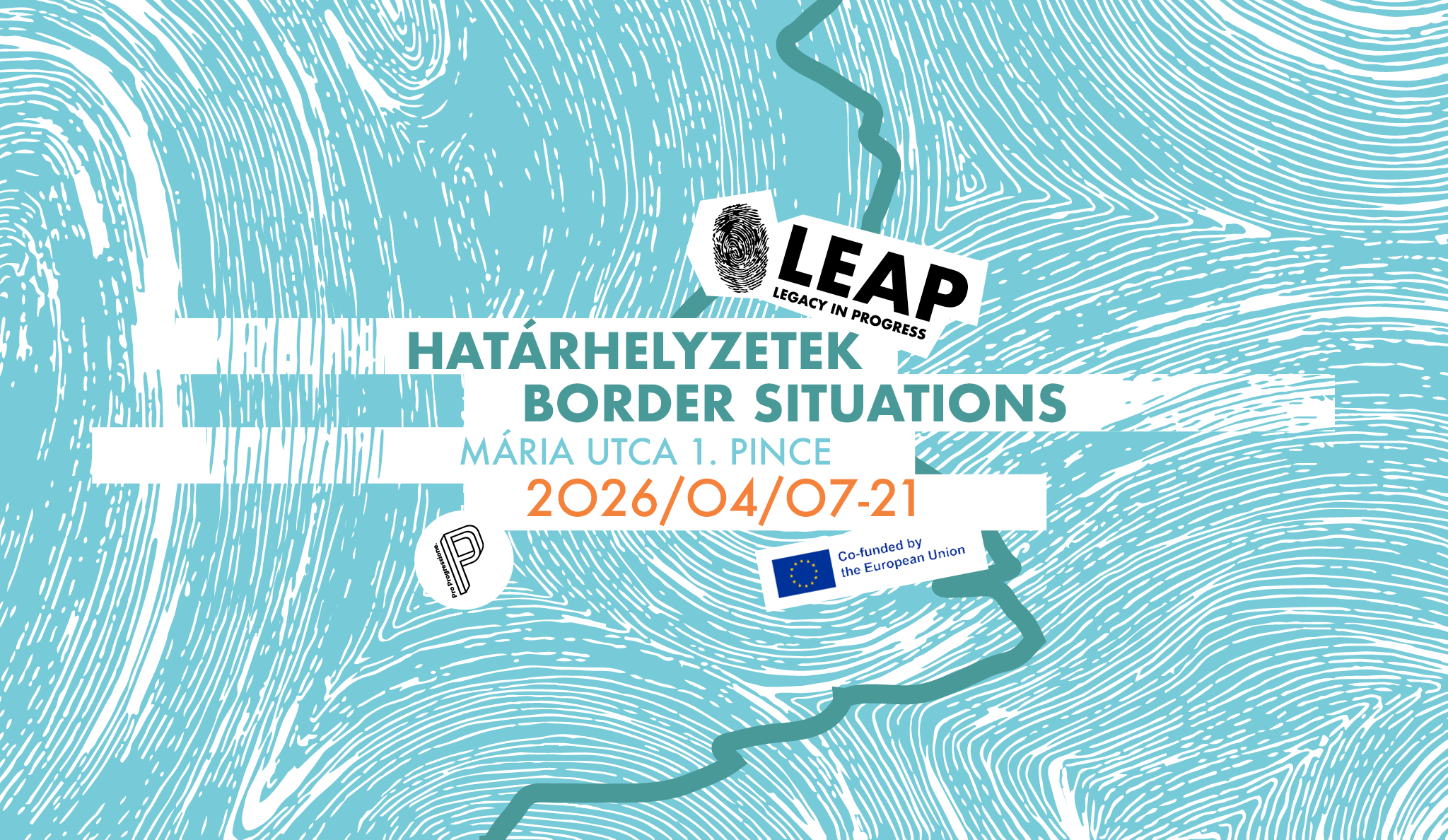
BORDER SITUATIONS – Budapest exhibition of the LEAP

Hungary was not a classical colonial power, yet the exhibition argues that colonial modernity — that is, the continuation of relations inherited from colonialism — extends beyond the geography of former empires. Stereotypes tied to skin colour and origin continue to shape institutions, border regimes, labour relations, and everyday language. In this sense, inequalities produced by colonialism are also reproduced in Hungary, alongside internal colonisation and self-exonerating narratives of victimhood. Solidarity is therefore framed here as a practice that can be learned: not pity, but self-critique, risk-taking, and accountability. In François Piquet’s two-channel film, parallel monologues by Guadeloupean, white, and racialised (non-white) speakers make the possibility of allyship perceptible through the viewer’s own reactions.

Leap Dsc08107 Másolat

From the perspective of Budapest, Border Situations draws attention to phenomena such as policing practices that disproportionately affect Roma communities, anti-refugee visual propaganda after 2015, the precarity of migrant labour, and the absences and distortions in the public representation of minority communities. Its central concern is racism as normality: the routine, often barely perceptible modes of operation that make discrimination part of everyday life rather than an exception. Here, the border is not only a political and geographical dividing line, but also an embodied experience, an institutional practice, and part of public discourse.


Leap Dsc08213 Másolat


The works in the exhibition approach these questions through the border, language, and the articulation of one’s own perspective: they make visible the regimes of entry and surveillance, the cost of mobility in labour, in family life stretched across time zones, and in urban space, as well as the language of slogans, propaganda, and the debates surrounding the dismantling of colonial ways of seeing. Community collaborations rooted in Budapest’s social reality bring into view Roma experience, the reversal of stigma, the search for possible futures, and participatory, performative attempts to process collective trauma, while avoiding performative empathy, the spectacularization of suffering, and liberal self-congratulation. Workshops, guided sessions, and roundtable discussions create an open space for dialogue, attention, and debate.

Leap Dsc08510 Másolat


🔵Participating artists: Gypsy Criminals collective, Sarah Diefallah, Róza El-Hassan, Anna Fabricius, Mansour Forouzesh, Zahra (Saba) Fuladvand, Anita Horváth, Dorottya Szonja Koltay, Norbert Oláh, Tímea Anita Oravecz, François Piquet, Regina Sárvári

🔵Curator: Johanna Liber
🔵Curatorial assistant: Osvay Dorottya Ilona

This project is funded by the European Union’s Citizens, Equality, Rights and Values Programme of the European Union.

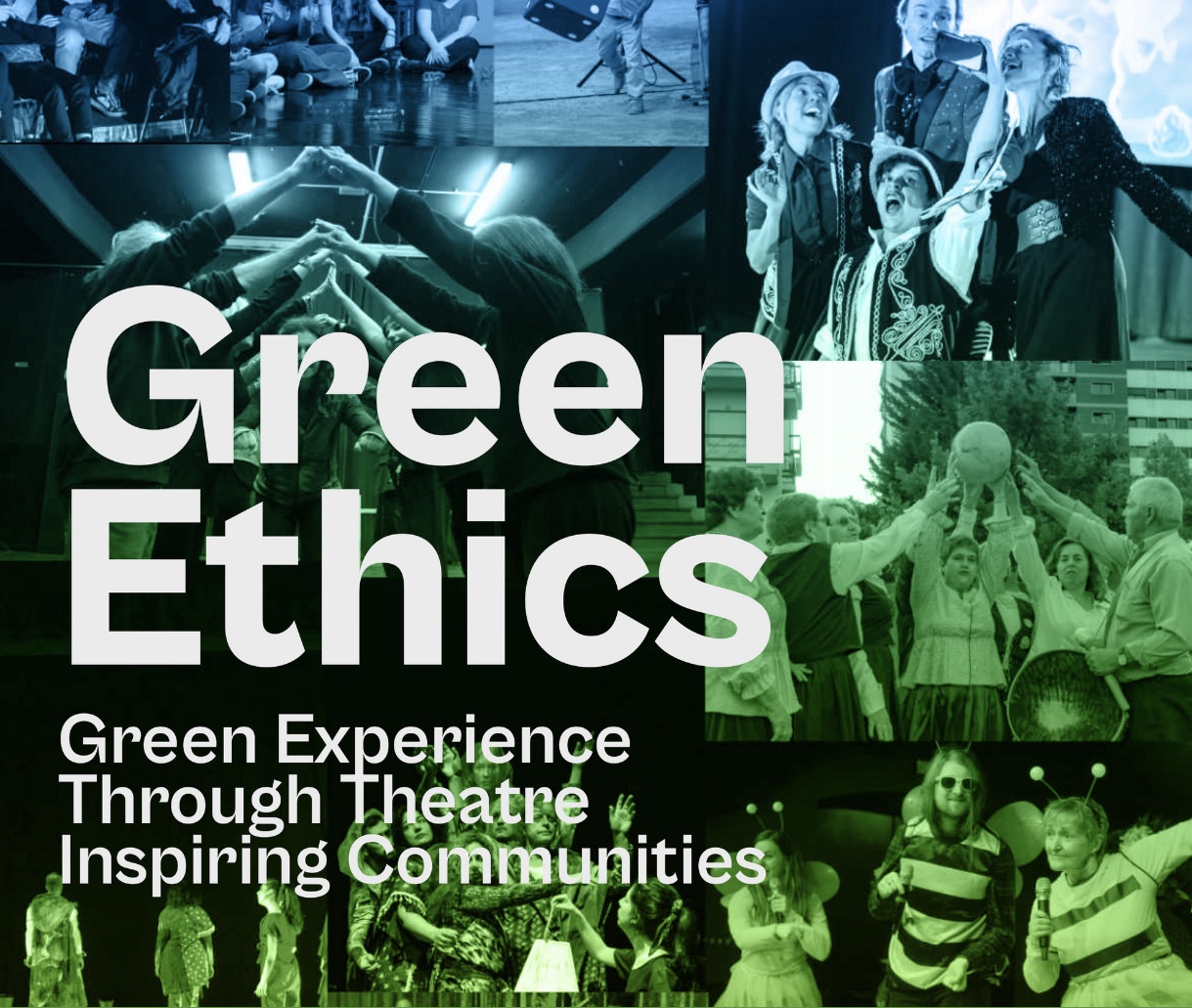
Green Ethics- NEWSLETTER

Uniting 18 partners and 64 associated partners across 12 countries, Green E.Th.I.Cs connected theatre companies, universities, research centres, cultural institutions, and civil society organisations. Through Social and Community Theatre, the project promoted environmental awareness, critical thinking, and active participation in line with the European Green Deal.

Screenshot

A European Journey of Participation

At the core of the project were ten interactive performances—collectively known as the Green E.Th.I.Cs LIVE Game—each co-created with local communities and tailored to diverse cultural contexts.

Across Europe, citizens collaborated with professional artists to explore sustainability and turn their ideas, concerns, and hopes into performative action. Audiences were not passive observers: they helped generate energy using the Pedal Powered Theatre kit, contributed to on-stage decision-making, and became co-authors of civic action.

Key outcomes

110 LIVE Game performances delivered

17,000 spectators engaged through performances

45,000+ citizens involved in artistic activities

Average impact scores above 7.5/10 for increased awareness, knowledge, and motivation to adopt sustainable practices

Participants also reported a deeper understanding of climate change, greater awareness of everyday sustainable choices, and a stronger commitment to responsible behaviour.


Screenshot

Workshops and Inclusion

Green E.Th.I.Cs was as much about the process as it was about the performances.

Artistic workshops across 10 countries engaged children, young people, adults, seniors, migrant communities, people with disabilities, and citizens facing economic or social challenges. Using theatre, music, movement, and visual arts, participants explored sustainable lifestyles, intergenerational knowledge, environmental justice, biodiversity, and pollution.

The project strongly championed inclusion and social cohesion:

16% of participants had a migratory background

8% were citizens with disabilities

32% faced economic challenges

43% belonged to minorities or marginalized groups

Green E.Th.I.Cs showed that climate action and social inclusion must go hand in hand.


Spaces for Future: The Board and Online Game

The Green E.Th.I.Cs BOARD and ONLINE Game – “Spaces for Future” – expanded the project’s reach to schools and community spaces.

Played 1,200 times and engaging over 30,300 citizens, the game became an innovative educational tool that blended science, play, and artistic storytelling. Teachers and educators appreciated its participatory approach and its capacity to stimulate meaningful conversations around environmental responsibility.

Each participating institution received a board game and the necessary tools to continue using it independently, ensuring lasting impact.

Screenshot

The Green Protocol: A Lasting Legacy

A key outcome of the project is the creation of the Green Protocol for Festivals and Live Events and the Green Protocol for Project Management—practical guidelines aimed at reducing CO₂ emissions in the cultural sector.

Adopted by over 110 organizations, the Protocol provides cultural institutions with the tools to implement environmentally responsible practices, ensuring a sustainable future for cultural events and projects.

Project partners: Cultiv – Associação de Ideias para a Cultura e Cidadania I Università degli Studi di Torino I Social Community Theatre Centre I ZID Theater I Teatr Brama I Compagnia Il Melarancio I Népkör Magyar Művelődési Központ I Narodna biblioteka “Njegoš”, Knjaževac I ASTA – Teatro e Outras Artes I Residui Teatro I omma studio theater I Πολυτεχνείο Κρήτης / Technical University of Crete I Universidade de Évora I Polo del ‘900 I Mulino ad Arte I Foundation for Entrepreneurship, Culture and Education

🌱 The Green Ethics project is co-funded by the Creative Europe program of the European Union.

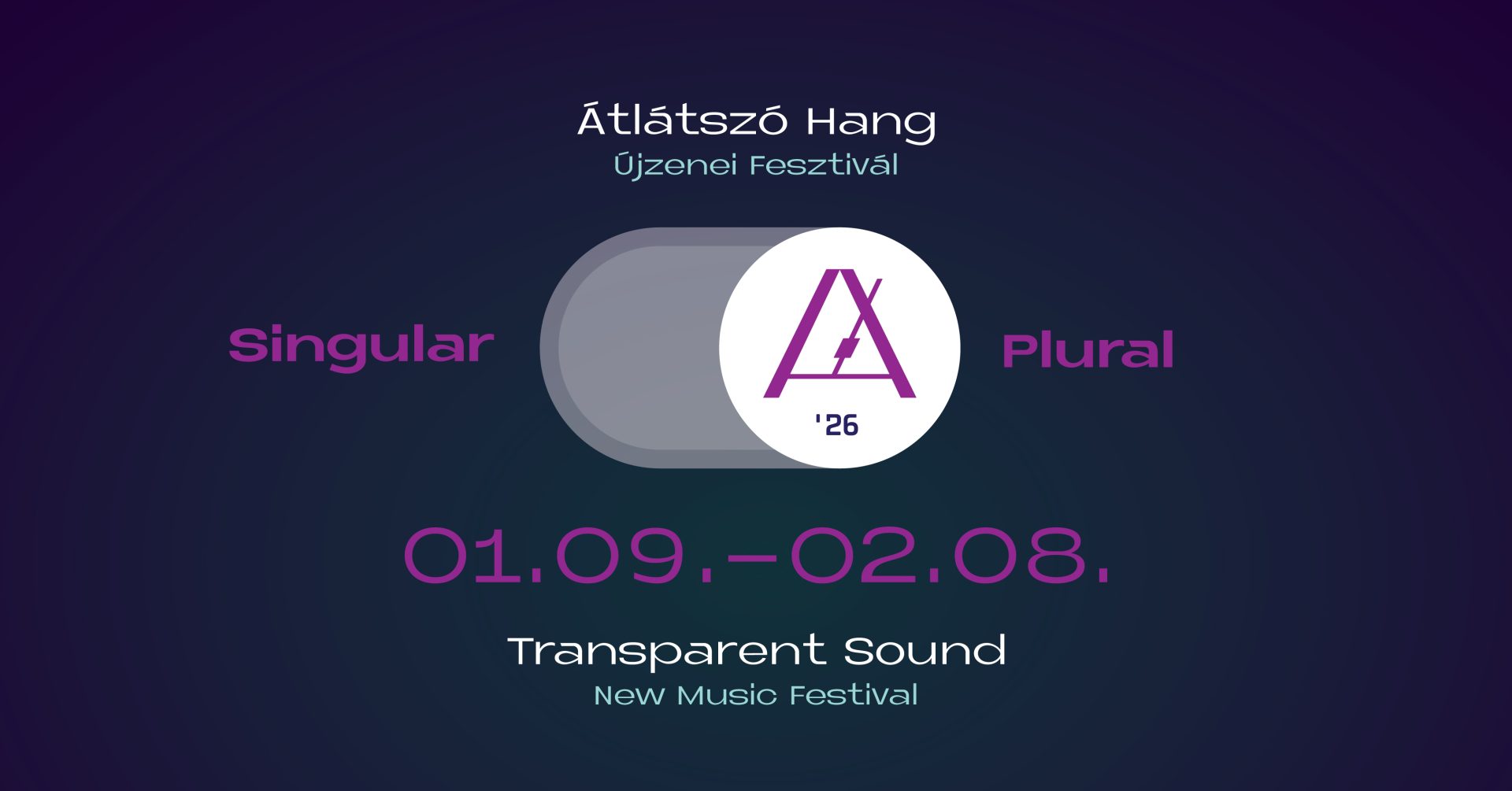
Singular // Plural

This year’s festival places special emphasis on the relationship between individual and collective expression, and on the dialectic of the solo sound and collaboration. The title Singular // Plural refers to the tension and richness that emerge when artists start from their own personal voices to create shared spaces and collective musical experiences, as well as when new, individual gestures arise from collaborative creation.

The Transparent Sound New Music Festival (meaning also ‘see-through note’) was founded by two composers, Balázs Horváth and Samu Gryllus, in 2014 in cooperation with several renowned concert halls and organisations in Budapest: the Franz Liszt Music Academy, Trafo House of Contemporary Arts, Budapest Music Center, Müpa Budapest and FUGA Budapest Center of Architecture, among others.

In a musical sense, “transparency” also refers to compositions with both audible and visual layers – in the form of new-music theatre or new media –, as they are a special focus of this festival.

The festival seeks to build bridges between traditional and experimental musical forms, inviting dialogue with audiences open to new experiences. Programs take place at venues across the city, including the BMC Concert Hall, Opus Jazz Club and the Music Information Center Library, the Solti Hall of the Liszt Academy, the House of Music Hungary, FUGA, Müpa, and – new venues this year – the MU Theatre, the GODOT Institute of Contemporary Art, and Bartók Pagony. In collaboration with partner institutions, the festival aims to make musical approaches often considered opaque or difficult more accessible and engaging.
The festival traditionally opens on 9 January at the Solti Hall of the Liszt Academy with Préludes: Chopin & Lazkano by Ensemble Cairn (FR), conducted by Guillaume Bourgogne. The UMZE Ensemble commemorates Péter Eötvös with a special concert of his experimental works from the 1970s at the House of Music Hungary. At the Budapest Music Center, the Korossy Quartet presents the music of German master Helmut Lachenmann, who turns 90 this year.

Renowned international ensembles and performers also take the stage in Budapest. This year’s program features violist Paul Beckett and the young Argo Kollektiv from Austria at FUGA, guitarist Samuel Toro Perez at BMC, and the Dsilton Trio at the Opus Jazz Club. The BMC Concert Hall hosts a collaboration between composer Dániel Péter Biró, based in Norway, and the world-renowned cellist Lucas Fels, who lives in Germany.
At the MU Theatre, the Danish ensemble Scenatet presents Memoriam, an interdisciplinary performance offering a distinctive new music theatre experience. One of the festival’s highlights is Parallel Realities at the Müpa Festival Theatre, bringing together works by István Márta and Jalalu-Kalvert Nelson (CH) with the Modern Art Orchestra, complemented by an introductory talk. The internationally collaborative film-concert Snapshot from the Tunnel by the Szemző Aquatic Quartet, featuring Fluidian – Emil Gherasim (RO), Alexander Krestovský (CZ), Tibor Szemző, and László Gőz, invites audiences to an unconventional musical journey at the BMC Concert Hall.

A distinctive feature of the festival is its wide range of interactive programs, offering new modes of listening for all age groups. At the House of Music Hungary, families are invited to the community performance Music to the Space! led by Vera Kardos, Samu Gryllus, Tara Khozein, and Vince Varga. Children’s workshops led by Zsófia Remes and Emese Molnár take place at Bartók Pagony, while interdisciplinary programs also include Fragments at the GODOT Institute of Contemporary Art. The Transparent Sound Film Club, curated by Marcell Dargay, welcomes audiences to the BMC on three occasions in January, screening landmark experimental and cult Hungarian films accompanied by discussions.

The festival continues to see it as a core mission to bring contemporary music closer to a wider audience, while providing space for new works, new collaborations, and new listening experiences.

For detailed event information, visit the festival’s continuously updated website and Facebook page:
https://atlatszohang.hu
https://www.instagram.com/atlatszohang/
https://www.facebook.com/atlatszohang
https://www.youtube.com/@atlatszohang6330


The festival is a member of the https://www.effea.eu/ 

Effe Label Logo 2026 2027 Black

With the friendly support of Ernst von Siemens Music Foundation.

Evs Sponsorsignet Engl 4c

Other supporters:

With the support of the National Cultural Fund.

Nka 2023 Angol

Co-funded by the (OKT) Osztrák Kulturális Fórum.

Osztrak

Co-funded by the Danish Arts Foundation.

Skf Logo Eng Red Rgb

Co-funded by the Arts Council Norway.

Arts Council Norway

Co-funded by the Ministry of Culture.

Kum Logo Rgb

Partners:

150 Zak Alapitva Hu

Zeneakadémia

Budapest Music Center Bmc Logo

Budapest Music Center

Unnamed

Opus Jazz Club

ImagesFuga

Images (1)

Magyar Zene Háza

Gryllus Logo

Gryllus  Kft

Tenger.media Final Big

Tenger Média

Umze Logo

UMZE

Müpa Idxnh6 D47 2

MÜPA

Ujmulogo (1)

Mu színház

Pagony Logo

Bartók Pagony

811367 C00f4b02aa2c4da7a8af406f61e2bcf3~mv2

Godot


LEAP-MEET THE ARTISTS

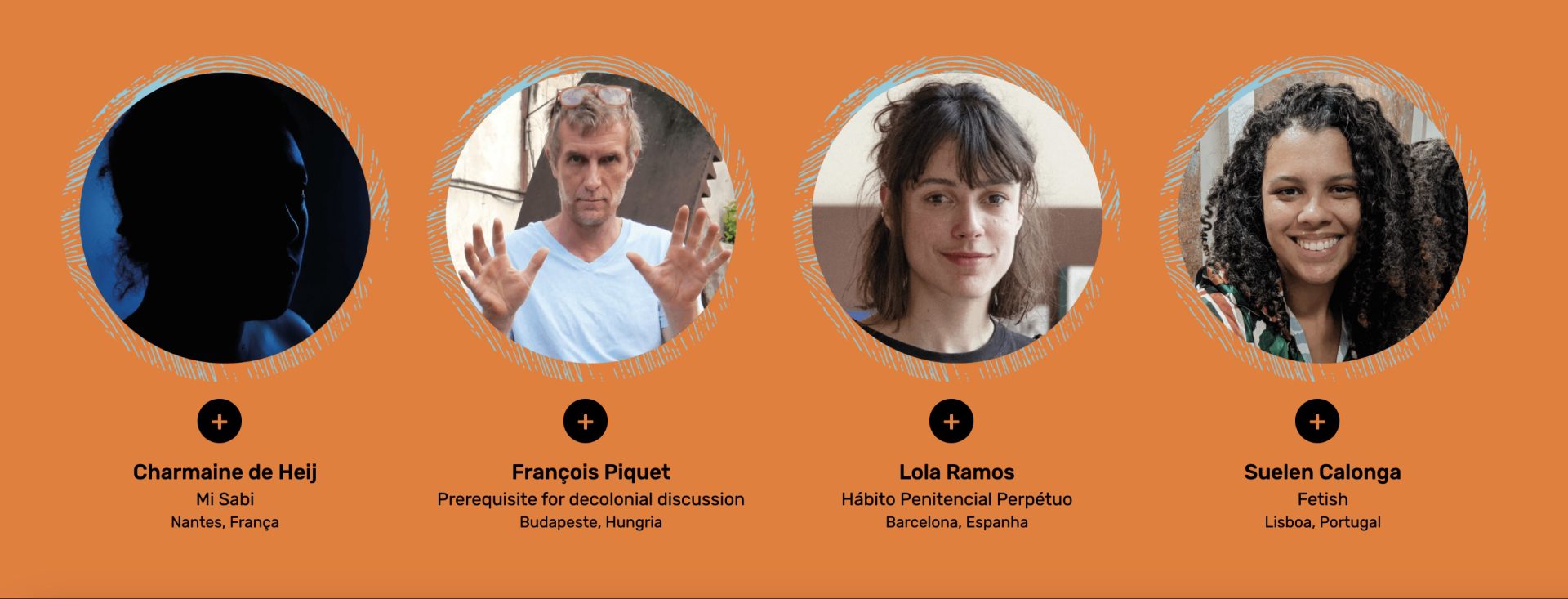
The LEAP project’s pop-up exhibitions are being organized in collaboration with four partner organizations in Lisbon, Barcelona, Nantes, and Budapest. The selected artists are Chamaine de Heij, visual artist, photographer, and curator from France; François Piquet, visual artist from France; Lola Ramos, multimedia artist from Spain; and Suelen Calonga, artist-researcher from Lisbon.

MEET THE ARTISTS!

Screenshot

Suelen Calonga Brazilian artist-researcher. PhD student in Art History (TU Berlin), she researches Afro-Brazilian heritage in European museums — provenances, institutional silences and memory policies. His practice combines writing, installation, and public actions. She has participated in exhibitions, festivals, residencies and research presentations in Brazil, Europe, the United States and the west coast of Africa, with projects that combine research, art and education.

ABOUT THE WORK: “Fetish” exposes listening as extraction. The installation inverts the colonial label of “fetish”, revealing the true act of fetishization: the European apparatus that captured, froze and domesticated the sound rituals of the African diaspora. A metal horn amplifies ritual recordings collected in Brazil at the beginning of the twentieth century; an original black wax cylinder (c. 1904), pierced by gramophone needles, stands tall like a wounded body; A grid of photos of ethnographic fieldwork scenes reveal the choreography of the capture.
This work is part of the thematic narrative Lusotropicalism and Theories of Negation

Screenshot

Lola Ramos is a multimedia artist whose practice explores the intersection between the feminine and the monstrous through drawing, audiovisual work, embroidery and ceramics. Since 2016, with Daily Monstrosities, he has investigated identity, the fantastic and the dark. After a residency in Buenos Aires, she developed the Selvática project during her master’s degree in Lisbon and is currently completing a PhD focused on the history of the persecution of witchcraft in Portugal and Brazil.

ABOUT THE WORK: Perpetual Penitential Habit is an embroidered penitential tunic that bears the names of more than 500 women persecuted by the Portuguese Inquisition for witchcraft. Through embroidery — a traditionally domestic practice associated with the female gender — the work transforms an instrument of punishment and humiliation into a memorial of remembrance and resistance.
This work is part of the thematic narrative Subjugation of Women and Gender Prejudice.

Screenshot

Charmaine de Heij is a visual artist, photographer, and curator who explores the influence of colonial history on contemporary representation, identity, and social structures. Her work focuses on revealing hidden histories, challenging historical and cultural misrepresentations, and creating counter-narratives that put the communities involved at the center. Themes such as racism, exploitation, gender, beauty standards and collective memory are central to her practice.

ABOUT THE WORK: Mi Sabi explores Surinamese-Dutch identity, demonstrating how Surinamese culture, from language and music to gastronomy and traditions, originates from the African diaspora, while continuing to exert a visible influence on Dutch society and its cultural diversity. Mi Sabi makes it clear that African heritage is an essential part of European diversity.
This work is part of the thematic narrative Afro-descendants and European Diversity

Screenshot

François Piquet, born near Paris (France) in 1967, has lived and raised in Guadeloupe since 2000. An industrial engineer and multimedia designer, he began his practice in the visual arts in Guadeloupe, with his first monumental sculpture. Currently, she continues to produce and experiment with contemporary Caribbean art in numerous solo and group exhibitions. The International Slavery Museum in Liverpool (UK) has added his work to its permanent collection, joining the ACTe Memorial and other arts institutions.

ABOUT THE WORK: Prerequisite for decolonial discussion is an artistic project that aims to establish conditions of encounter and help in decolonial discussion, highlighting the archetypes and breaking points of this dialogue and providing elements of resolution. It affirms the essential bases of discussion of this debate, presenting them as “truths” to be assimilated, despite the violence inherent to this process.

The project is presented as a video installation, with two different films shown in an independent loop side by side. On both sides, people living in Guadeloupe (who have agreed to participate in this project) vehemently address truths of the decolonial discussion to the viewer. As the two films have different durations, the statements respond to other statements, placing the viewer in front of this decolonial confrontation, challenging their collective and personal identities.                                                                      This work is part of the thematic narrative Transatlantic trafficking of enslaved people and its consequences today.

More about selected Artist: https://gerador.eu/leap/?fbclid=IwY2xjawOkz9ZleHRuA2FlbQIxMQBzcnRjBmFwcF9pZBAyMjIwMzkxNzg4MjAwODkyAAEeQ0slGcbXz7UWU8_0DoRQ6T-fjeawt_T4qHqRmy7Aa2WHCcy4RtOcjd6l2JY_aem_2Smyx6BvV30K_0Ug-GqGQg

More about the projeckt: LEAP – Pro Progressione

Through LEAP, we aim to contribute to building more inclusive European societies by confronting difficult histories and amplifying diverse voices. The project runs for 14 months and is co-funded by the European Union’s CERV programme.

Meet the Lighthouse Art Projects – Danube River–Black Sea Selection

Selected Artists & Projects

Romania
Candea Profile

Floriama Candea – Neural Bloom
Interactive installation reimaging breathing as a shared act among species, and exploring the hidden cycles that sustain waterborne life of the Danube Delta.

Georgia / US

Komakhidze Profile

Patterson Profile

Lia Komakhidze & Graham Patterson – A Light in the Black
A documentary that blends personal memory and connection with the ecological reality of the Black Sea today. It links together art and science, knowledge and creativity.

Hungary

Illes Profile

Zsófia Szonja Illés – Floodforest
A participatory project reimagining the fonó as a collaborative artistic and ecological practice to explore ecological knowledge of Tisza floodplain communities.

Bulgaria

Ivanova Profile

Pepa Ivanova – Eat That Invasion
An art-science research that examines the entangled relationship between invasive, alien species, human-induced pollution, and the resilience of marine and coastal ecosystems in the Black Sea, blending video essay, speculative culinary book, performative actions and field research.

Romania / Transylvania

Kopiakollektiva Profile
Kopia Kollektiva – Bitter Salt Flow
A participatory art project created in response to the ecological disaster that struck the salt mine in Praid, Transylvania, on May 29, 2025, through film, photography, and co-creation.

👉 Find all artists and their full project descriptions at: https://tidalarts.eu/lighthouse-artist/

This project is funded by the European Union under Horizon Europe research and innovation programme.

TIDAL ArtS OPEN CALL FOR ARTIST RESIDENCIES – THE CALL IS CLOSED!

TIDAL ArtS will award four Residencies in Portugal, Italy, Finland, and Hungary that come with financial grants of 50,000 Euro each. These Residencies are open to artists, collectives, and creatives who can inspire and engage people in the Mission through their unique artistic creations and community engagement activities. These artworks will connect communities to their local waters, celebrate that connection, reflect the Mission’s themes, and highlight the four key ocean and water basins that serve as regional hubs for inspiration and action. These four hubs are known within the Mission as “Lighthouses”, and they include the geographic regions around the: Atlantic-Arctic, Mediterranean, Baltic-North Sea, Danube-Black Sea.

📩 Application deadline: November 15, 2025
🔗 More information: tidalarts.eu/residency-call

💻 We held our online Open House on 27th October at 18:00 (CET)
🔗 If you missed the event, you can find the recording of the event here.

The TIDAL ArtS project is funded by the European Union under the Horizon Europe research and innovation programme.

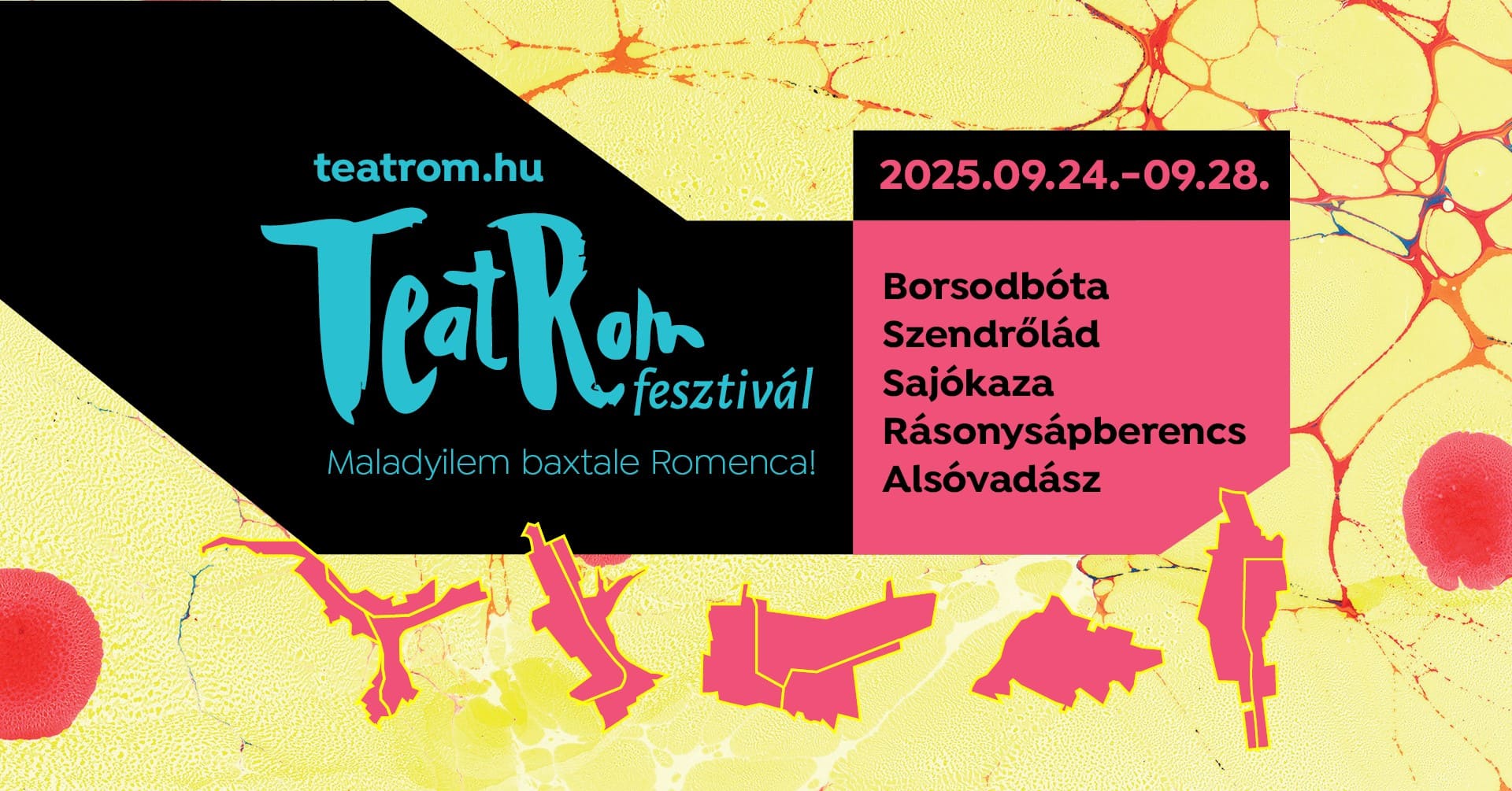
TeatRom Festival 2025

This year, the TeatRom Festival visits five villages in the Cserehát region, bringing community experiences, talent showcases, and contemporary theater performances close to local audiences.
The week-long program offers something for all ages: theater and circus games for children, community team games for adults, and music and fire performances for everyone.

Admission is free at all venues!

Borsodbóta – September 24, Wednesday | Schoolyard

16:30 – Festival Opening – Welcome by Mayor János Gulyás and Julianna Budai

16:40 – Our Village – Community Afternoon
• Adults: Be a Problem-Solver! – Led by Gabriella Molnár-Keresztyén & Balázs Simon
• Children: Circus games with All in Circus Company

17:30 – Talent Show – TeatRom talents perform with Luma Beat

19:00 – Fire performance by All in Circus Company

20:00 – Awards & Concert – Luma Beat concert and dance with the Búza Family


Szendrőlád – September 25, Thursday | Kiskastély Outdoor Stage

13:00 – Autumn Parade

14:00 – Festival Opening – Welcome by Mayor Szilveszter Horváth and Károly Káló

14:10 – Our Village – Community Afternoon
• Adults: Be a Problem-Solver!
• Children: Circus games + collaborative painting

15:45 – Talent Show – Performance by Luma Beat

17:00 – Two-in-One – Special performance by All in Circus Company

18:00 – Awards & Concert – Luma Beat concert and dance

Fire surprise by All in Circus Company


Sajókaza – September 26, Friday | Cultural House

16:00 – Festival Opening – Welcome by Éva Ádám

16:10 – Our Village – Community Afternoon
• Adults: Be a Problem-Solver!
• Children: Circus games + collaborative painting

17:30 – Talent Show – Luma Beat performs

18:30 – Fire performance by All in Circus Company

19:30 – Awards & Concert – Luma Beat concert and dance house


Rásonysápberencs – September 27, Saturday | Cultural House

15:00 – Festival Opening – Welcome by Mayor Ferenc Medve and Tamás Trézsi

15:10 – Talent Show – Performance by Luma Beat

16:30 – Musical Roma folk tale performed by Csillaghajó Workshop

17:30 – Our Village – Community Afternoon
• Children: We Were Birds games
• Adults: Be a Problem-Solver!

18:30 – Awards & Concert – Luma Beat concert and dance house


Alsóvadász – September 28, Sunday | Community House

15:00 – Festival Opening – Welcome by Mayor László Vróbel, Dezső Ganyi, and Jázmin Horváth Liliána

15:10 – Our Village – Community Afternoon
• Adults: Be a Problem-Solver!
• Children: Theater games with Csillaghajó Workshop

16:30 – Talent Space – Performance by Luma Beat

17:00 – Talent Show

18:00 – Musical Roma folk tale by Csillaghajó Workshop

19:00 – Awards & Concert – Luma Beat concert and Roma dance house with the Búza family


The performances by All in Circus Company and Csillaghajó Productions are presented with the support of the Sparse PLUS international project, co-funded by the Creative Europe Programme of the European Union.
Realized with support from the National Cultural Fund of Hungary.
Special thanks to the municipalities of Alsóvadász, Szendrőlád, Borsodbóta, Rásonysápberencs, and Sajókaza.

For more details: please visit the TeatRom official website

RE-IMAGINE Online Closing Conference

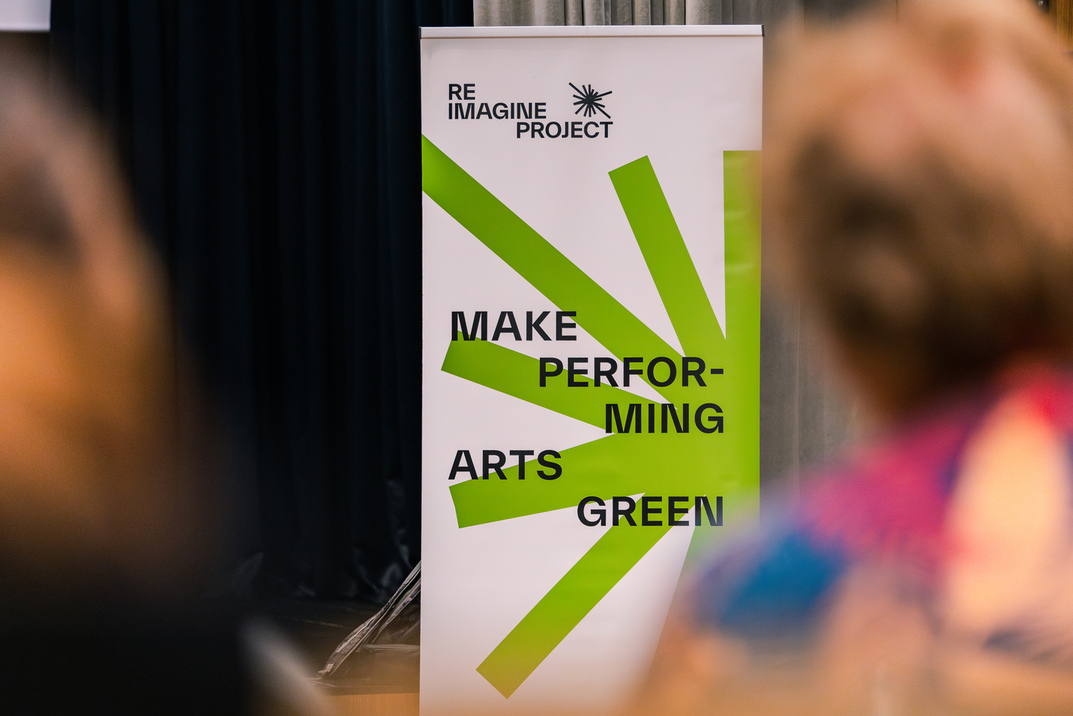
Over the past two years, the RE-IMAGINE project has brought together partners from Serbia, North Macedonia, Hungary, and Bulgaria to explore how the performing arts sector can reduce CO₂ emissions, move towards zero waste production, and embrace its role as an agent of environmental change.

This pioneering European cooperation project has focused on building the capacities of organisations and professionals—especially in less developed EU countries—to adopt sustainable work practices both internally and in their public activities.

The conference will present the project’s results, experiences, and recommendations, and invite professionals from the cultural sector to discuss how we can re-imagine our future together.


Date: Thursday 18 – Friday 19 September 2025
Venue: Online (Zoom)
Language: English
Participation is free, but registration is required. To register for the online conference please use on-line form below: https://forms.gle/5EPqdxs5FPfkw56q7


Programme


DAY 1 – Thursday, 18 September 2025

10:00–10:30 (CET) | Opening & Coffee Session: Networking and informal introductions
Welcome by Gábor Németh, Hungarian Creative Europe Desk member.
Host: Dorka Gadus (Pro Progressione)

10:30–11:00 (CET) | Opening Keynote: Climate crisis: Predicted. Confirmed. Ignored?
Speaker: Vladimir Đurđević
Moderator: dr Jovana Karaulić (Green Art Incubator)

11:00–12:30 (CET) | RE-IMAGINE Toolkit Session
Presentation and workshop on the practical tools developed during the project for sustainable practices in the performing arts.
Facilitators: dr Ksenija Marković Božović and dr Jovana Karaulić (Green Art Incubator)

12:30–14:00 (CET) | Break

14:00–14:45 (CET) | Interactive Session: Green art and artistic freedom
Speaker: Philipp Thapa (Sustainable Europe Research Institute Germany)

15:00–15:45 (CET) | Roundtable: Sustainable Mindsets from the Margins
Facilitator: Vassilka Shishkova (
Roundtable guests:  Pippa Bailey,  Pankaj Tiwari

18:00–19:00 (CET) | Evening Session: Ecological futures and environmentally-activated art practices
Interactive contribution by Miguel Sbastida


DAY 2 – Friday, 19 September 2025

10:00–10:30 (CET) | Coffee Session
Networking and informal introductions

10:30–11:15 (CET) | Keynote Speech: Critical sustainability – making sense of cultural institutions’ eco-responsibility
Speaker: Vânia Rodrigues (University of Coimbra)

11:15–12:30 (CET) | EU Policy Session
Discussion with the representatives of local Creative Europe Desks

12:30–13:15 (CET) | Break

13:15–14:00 (CET) | Supporting Artists in Sustainable Production – Inside RE-IMAGINE
Speakers: Luca Kövécs (SÍN Arts Centre), Laura Tóth (‘Miss Sparkle from the Superhero Tutorial production)

14:45–16:15 (CET) | All RE-IMAGINE Participants Interactive Session
Led by Dimitar Uzunov (

16:15–16:45 (CET) | Closing Session


The event will be recorded and photographed. The data will be used for information purposes, dissemination of results, and promotion of the project.


Project partners:
Green Art Incubator (RS)

Arte Urbana Collectif (BG)

Pro Progressione (HU)

Lokomotiva – Center for New Initiative in Arts and Culture (MKD)

RE-IMAGINE is co-funded by the Creative Europe programme of the European Union. With the support of the National Cultural Fund (Nemzeti Kulturális Alap).
The opinions and statements contained herein reflect the views of the author(s) and do not necessarily reflect the official position of the European Union or the European Education and Culture Executive Agency (EACEA). Neither the European Union nor the EACEA can be held responsible for them.

LEAP- INTERNATIONAL OPEN CALL FOR CREATIVE WORKS – THE CALL IS CLOSED!

Leap Call 4 En 07 (1)

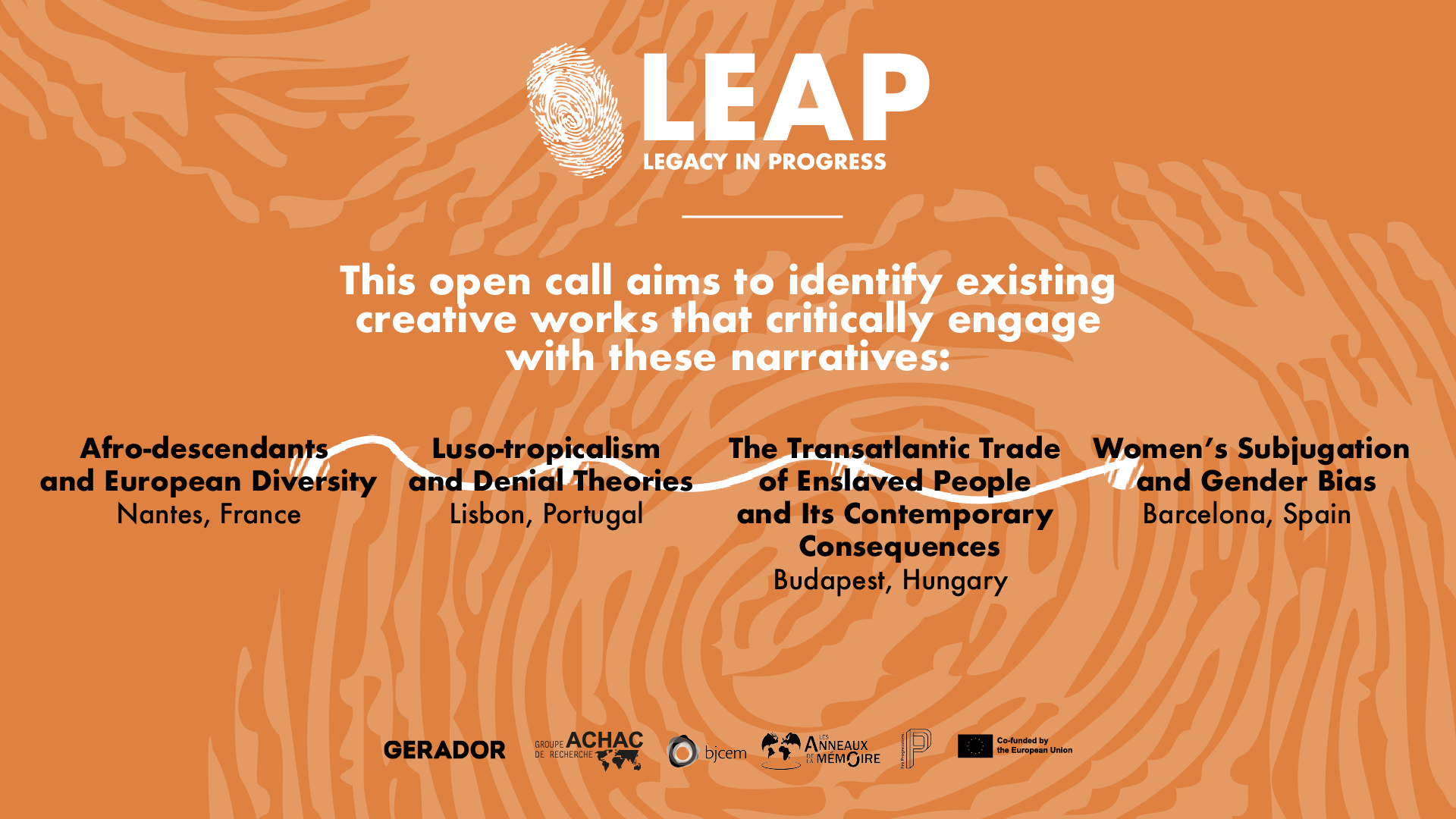
Within the scope of LEAP, there will be four pop-up exhibitions in unconventional spaces in Europe, between March and April 2026, each focused on a thematic narrative which you can consult below. This international open call aims to identify existing creative works that critically approach these narratives, made by emerging or early career creators, including visual and digital artists, audiovisual creators, illustrators, designers, architects, podcasters, vloggers and multidisciplinary artists.

💻On July 30, join the online information session about the open call for the LEAP – Legacy in Progress project.

📅 Online session: July 30 at 16 CET.
Sign up here: Gerador
📩 Submission of works until September 15
🔗More information at gerador.eu/en/leap

LEAP is a project co-financed by the European Commission that seeks to stimulate a broad and comprehensive reflection about the historical truth surrounding the colonial legacies. By exploring the deep-rooted links between these legacies and contemporary racism, the project aims to create a space for reflection, dialogue and transformation.
The project is developed by an international consortium that brings together Gerador (Portugal), Les Anneaux de la Mémoire (France), Achac Research Group (France), Pro Progressione (Hungary) and BJCEM – Biennale des jeunes créateurs de l’Europe et de la Méditerranée (Belgium). Part of the consortium previously collaborated on a project that laid the foundation for this initiative, the MANIFEST: New artistic perspectives on memories of the transatlantic trade of enslaved people.