RE-MARK – Art and Culture Revitalizing Rural Farmers’ Markets and Communities
Transforming rural markets into creative spaces for culture, community and local economies across Europe.
We engage with local and disadvantaged communities through socially engaged arts projects. We believe that creative minds play a crucial role in building a just society. Through socially engaged art tools and artistic activism, we address issues such as identity consciousness and community building (CUC), social wellbeing (Perfare), resilience (CREATResili), artivism, social inclusion, gender equality and sustainability in the arts (Academy), integration through art activities (Book of Dreaming) and community engagement by art commissioning and active participation in the process of creating art (DemArt). We also place great emphasis on advancing intercultural and transcultural competence trought arts (Intracomp) and empowering emerging cultural professionals through solidarity, diversity, and inclusive artistic practices (ESR).
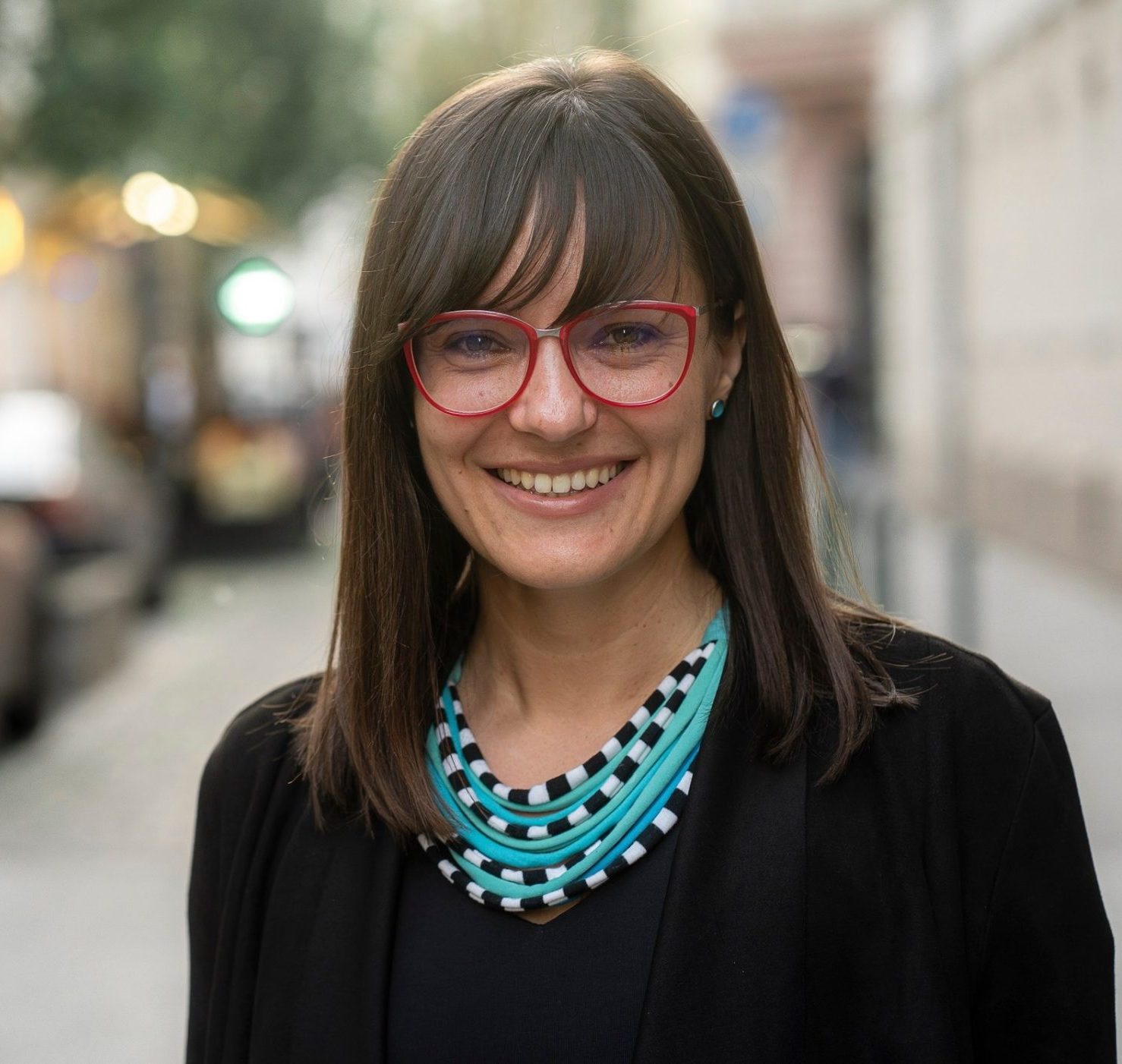
Throughout my studies (history – geography teacher, environmental educator, cultural manager) and my previous work, I have always had a special interest in interdisciplinary fields and different ways of transferring knowledge and skills. I attach great importance to the impact of the arts on individuals and communities and their role in society, as well as their function as a specific means of linking and triggering social, environmental and economic entities.
With an academic background in cultural anthropology, my professional interests lie at the intersection of education, art and community engagement. I joined Pro Progressione’s Social pillar in October 2023 as Cultural manager. Previously, I worked at the European Roma Institute for Arts and Culture (ERIAC) in Berlin, overseeing the implementation of a transnational Roma pride campaign. Prior to that, I was Program manager of Central European University’s executive education unit, the Global Policy Academy. Outside my project management roles, I have also worked as a curator, editor, copywriter and executive producer in numerous interdisciplinary and community-focused art projects. I hold an MA in cultural anthropology and an MA in English language and literature from Eötvös Loránd University (ELTE) in Hungary.
Over the past ten years, I have gained experience in youth work, community development, and socially engaged art projects, mainly within the framework of international, EU-funded programs. In my work, I use art as a tool to promote social dialogue, inclusion, and active community participation.
Within Pro Progressione’s Social pillar, I am particularly interested in supporting participatory, inclusive, and sustainable artistic practices, as well as artivism and intercultural learning. I believe that art can create a safe space for collective reflection on identity, well-being, and community issues, while also generating real social impact.
Transforming rural markets into creative spaces for culture, community and local economies across Europe.
OASis (Open Art Spaces in Synergy) is a three-year (2024–2027) European project aimed at making art more accessible by establishing a network of open and interdisciplinary creative spaces across 10 countries. Co-funded by the Creative Europe programme, the project is implemented by a unique consortium comprising 14 diverse institutions, including NGOs, cultural organizations, municipalities, and a university.
‘The Book of Dreaming’ has its roots in the current social situation of participating countries that are coping with the integration process of Ukrainian children. The project aims to strengthen the integration through art activities and focuses on activities in 4 partner countries: Poland (Wrocław), Latvia (Riga/Ludza), Hungary (Budapest) and Ukraine (Lviv).
The European Solidarity Residency (ESR) is a small-scale intarnational cooperative project designed to empower emerging cultural professionals (CPs), especially those from underrepresented and disadvantaged backgrounds. Built on the idea that solidarity through art can drive positive social change, ESR promotes diversity, environmental awareness, equality, and inclusion across Europe’s cultural and creative sectors.
Amidst the unprecedented speed and scale of forced migration and climate mobility in Europe, arts in education has a significant role in promoting social inclusion, diversity and cohesion. Critically exploring cultural hierarchies, divisions and exclusions within arts and education, INTRACOMP develops methods, digital resources and frameworks for advancing Intercultural and Transcultural Competence (ITC) in lifelong learning in Cultural Awareness and Expression.
The CUC // Community (Builders) Under Construction project aims to find new, innovative ways in which art can contribute to community building in marginalised groups. The role of art in community building is getting increasingly crucial, however, with a lack of well-structured methodology and adaptable ethical framework, its direct effect is still unconscious and not sustainable.
The general concept of CREATResili is based on the approach of using creative means, especially social design to build the resilience of marginalized groups and raise awareness of social issues. Among a wide range of creative forms and expressions, our focus is on the socially engaged arts, which, due to its subject, targets social inclusion and enhances social resilience through creativity.
Since 2014, we’ve been organising our yearly Summer Academy Erasmus+ programme, which focuses on art and creative work as a powerhouse for social transformation. The two-week training programme invites professionals from the social, educational and artistic fields based in different European countries as well as in Erasmus+ eligible countries.
Lingotell is an innovative, people-centred and forward-looking approach, aiming towards a real change in how stories are managed and valued both as part of our cultural heritage and to fuel the storytelling of the minority or indigenous languages in Europe and thereby also our European shared future.
Democratising art commissioning by involving local communities
DemArt aims to democratise art funding by developing an innovative, replicable participatory process for municipalities to enable community members to award commissions to selected artists.
PERforming arts to promote social welfARE access in Europe
PERFARE (2022-2025) is a project co-funded by the Creative Europe Culture Programme, which intends to enhance the cooperation between the cultural and the welfare sector by creating innovative models for artistic interventions supporting people with physical or mental health issues.
Project CREATIVE AGORA promotes the European dimension in non-formal, participatory arts education for adults for Europe’s disadvantaged and diverse communities.
The V4-SAP project is focusing on Social Art Practices in the V4 region. This project has some interrelated components with our ongoing Academy for Actors of Civil Change project, but it is independent from it. Our goal with the V4-SAP project is to implement in the V4 region knowledge and best practices harvested from our already running Academy.
On 2nd October, Pro Progressione has organised its first large-scale digital conference titled @cademy Conference: Social art practices in the digital era.
The idea for ACADEMY+ was born from the common projects of the partners in the field of youth and socially engaged art practices. Its aim is to further develop the methods used by them in their daily work through joint brainstorming, testing and regular feedback, and to make the creative development of disadvantaged young people even more effective by coordinating and combining the four methods.
We organize yearly our Summer Academy Erasmus+ programme, which focuses on social change as the title shows. The 2-weeks training programme invites professionals of social and educational fields coming from 8 different countries from all over Europe and provide them the opportunity to learn formal and non-formal artistic methods and put the newly gained knowledge into practice with the help of professional advisers.
FAR – Fight Against Radicalisation was an international training for artists, youth workers, young pedagogues, social workers and volunteers who believe that art can be a powerful tool toward social change. The aim of the project was to find different artistic tools that can raise awareness around radicalisation. The project was a collaboration between four European partners. In the framework of the FAR project we were implementing a youth exchange which was result in a series of participatory workshops for high-school students and a thematic festival.
Play! MOBILE aimed to encourage cultural participation in the micro regions of Europe. We believe that community art practice, the creation of modifiable site-specific installations and the development of a participatory game as a platform for interaction between artist-artifact and public, offers a sophisticated and inclusive way for capacity building and the development of new audiences. By turning public spaces of the visited settlements into playgrounds of contemporary art, we aimed to create an alternative way of cultural consumption, a methodology to present contemporary artworks without the necessity of having all the satisfactory infrastructure.
EXCEPT was a 2 years long Europe-wide program with six directly involved countries (Germany, France, Italy, Poland, Serbia and Hungary). The project EXCEPT aimed to start up the tradition of social theatre in Europe by knowledge transfer between European theatrical companies.
Our Summer Academy for Non-Formal Youth Practices aimed to address the challenges taking place in the education of underprivileged children from remote areas, facing a lack of basic human competence. Based on the recognition that stage is an exceptionally effective asset of community building, our core team established new ways of social work through arts and culture to work with the disadvantaged youth.