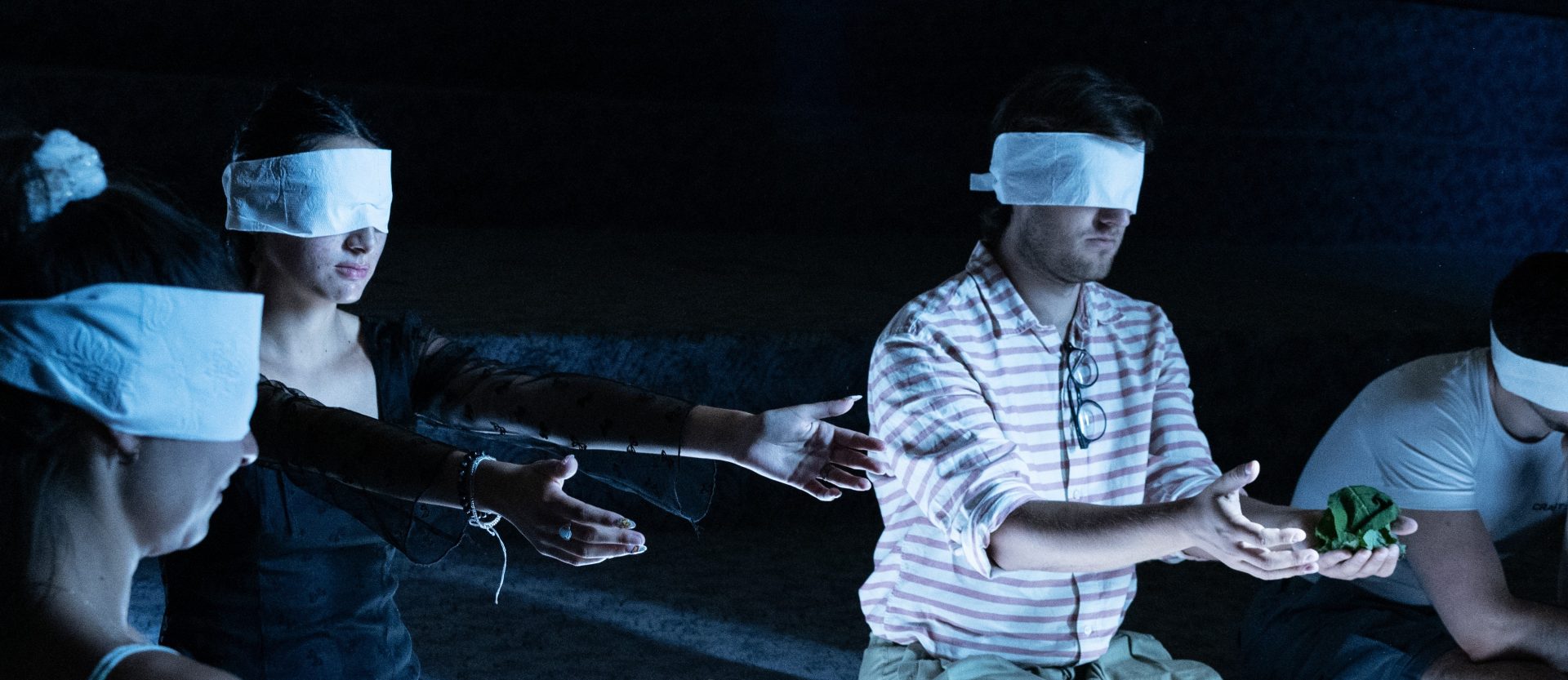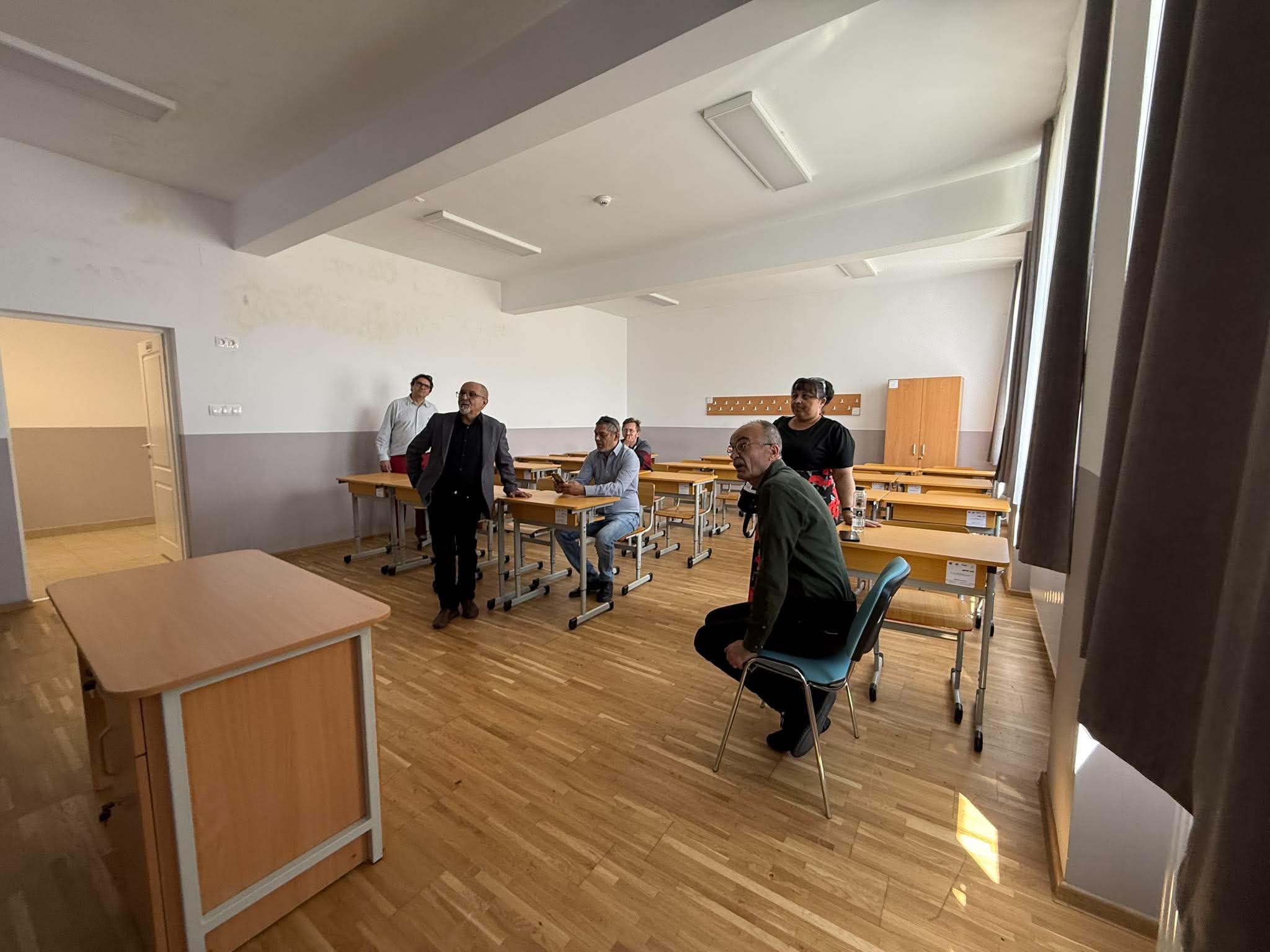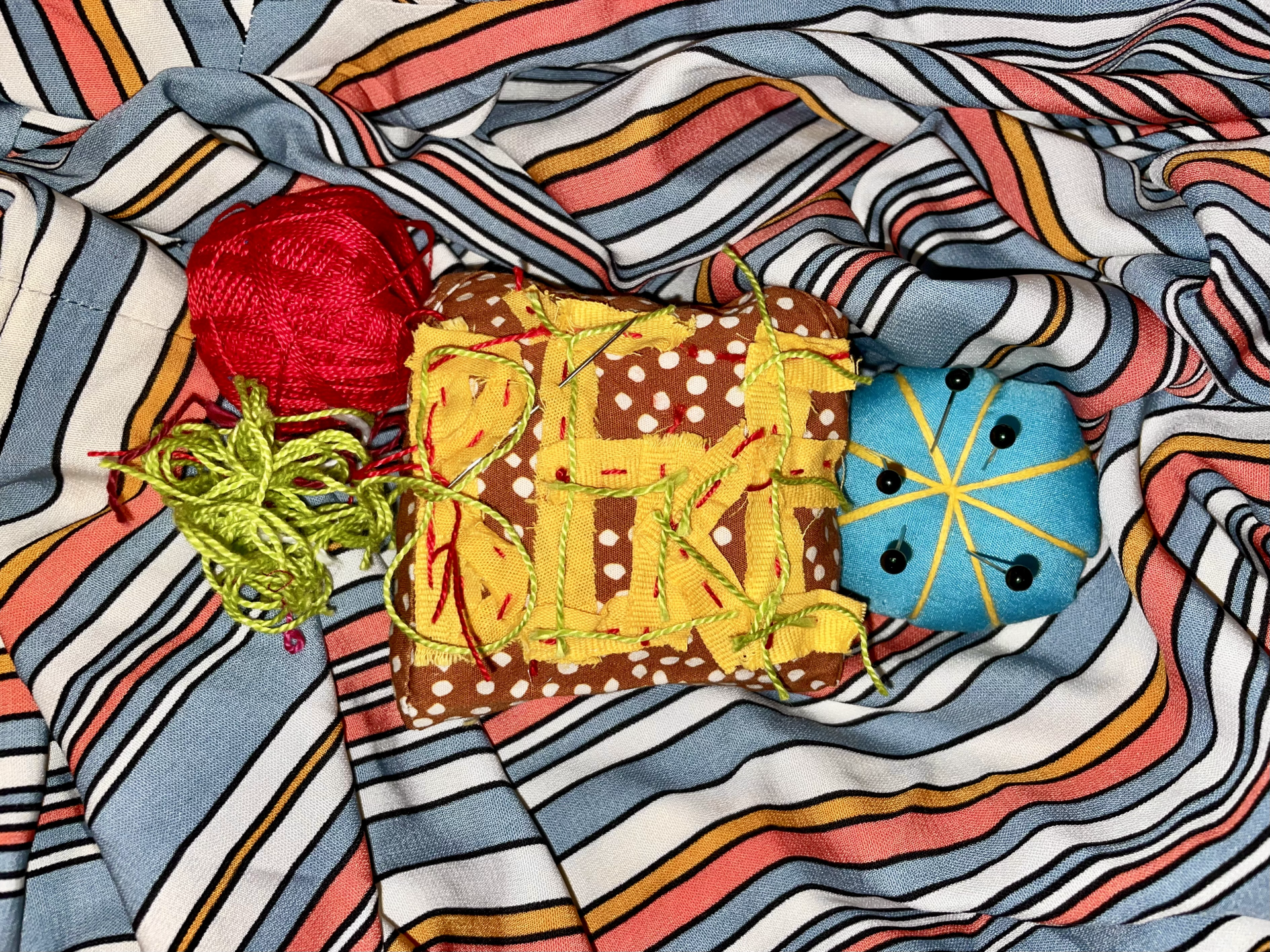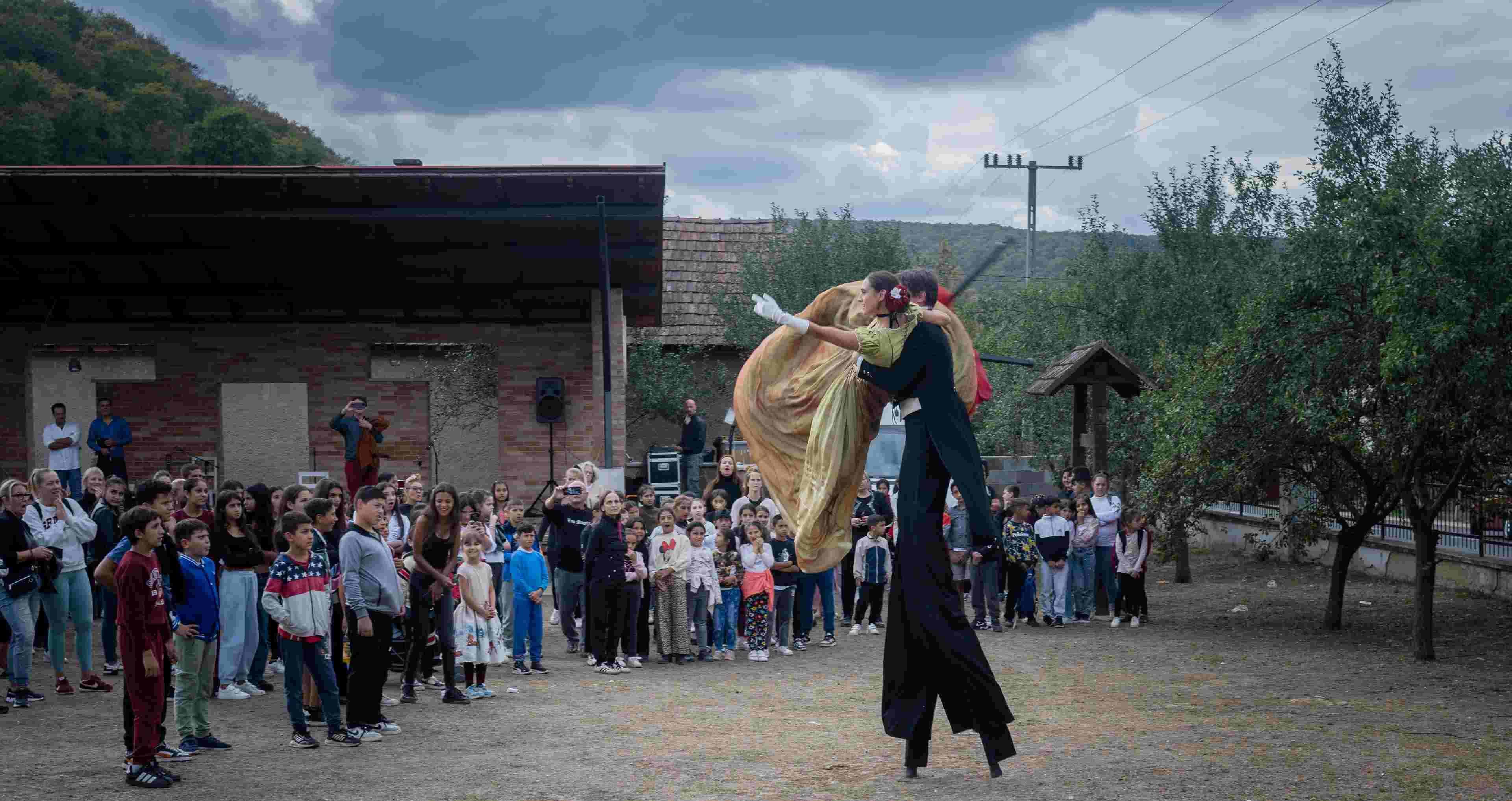
What happens when a festival not only brings performances to a town, but also creates opportunities for local communities to meet, collaborate and create together?

Annamária Jacsó, the project manager, recalls the most memorable moments of the TeatRom Festival and the closing events through her own personal experiences.

I’m originally from Borsod, a region in northeastern Hungary. I grew up here and spent my university years in Miskolc, the region’s largest city, yet somehow I had never visited the villages where the TeatRom Festival took place. It wasn’t because of any negative feelings or prejudices – I simply never had the opportunity. This time, as the organiser of the SPARSE Plus closing conference and the project’s final international partner meeting, I had the chance to get to know these villages and their communities a little better.

My first encounter was in Alsóvadász, a small village near Miskolc. I arrived by car, and even before reaching the venue, I was welcomed by smiling local volunteers in yellow vests. They enthusiastically guided arriving guests, showing us where to park and how to find the performance venue. These were simple gestures, but they immediately made me feel that something special was happening here, and that our presence was genuinely appreciated.

The audience was already gathering inside. So many curious eyes, people shifting in their seats, a sense of excitement, anticipation and pride. We were about to watch a staged reading of Cigányváros (Gypsy Town), featuring local children alongside amateur and professional adult actors from the TeatRom team.

What struck me most wasn’t necessarily the story itself, but the way everyone was so fully engaged. The way they paid attention to one another, how carefully the children tried to deliver their lines, and how the adult actors supported them. Some read from their phones, others from sheets of paper. For me, this didn’t take anything away from the performance. Quite the opposite: it made their dedication even more visible. They wanted to get it right. What they had created mattered to them, and they wanted to share it with others.

Everyone in the audience followed the performance closely. They weren’t simply watching a play; they were watching their own children, friends and neighbours on stage, witnessing the results of something they had created together. The performers’ excitement and the audience’s pride seemed to come together.

Later, the audience gathered around the outdoor stage set up in the courtyard. Local families, children, young people and older residents sat and stood in tightly packed rows. The instruments brought by the Italian theatre company Teatro Tascabile di Bergamo, especially the drum kit, attracted a lot of attention. One little boy was clearly eager to give the drums a try. Instead, I encouraged him to dance on stage first and wait for the musician to play the instrument himself.

What stayed with me most was the expression on the children’s faces when they had the chance to step onto the stage. There was joy, excitement and pride all at once. That special kind of happiness that comes from feeling seen, knowing you belong, and discovering that what you do matters to others.

On Thursday, the programme continued in Miskolc, where I had a very different role to play. As the organiser of the SPARSE Plus closing conference, my attention was mainly focused on making sure everything ran smoothly: the participants, speakers, programme, technical arrangements, and all the small organisational details that go into an international event.

The conference gave project partners an opportunity to look back together on three years of work, reflecting on achievements, challenges and lessons learned. Throughout the presentations and discussions, one question kept coming up: what does access to culture really mean for rural communities?

On Friday, in Szendrőlád, another village in northeastern Hungary, I experienced that same sense of community once again. During the local talent show, Ki mit tud? (literally, “Who Knows What?”, a popular Hungarian format where participants showcase their talents), children and young people took to the stage not only with individual performances but also in groups. They recited poems, sang and danced. The audience’s attention and encouragement seemed to give the performers even more confidence and energy. It was wonderful to see how naturally they cheered each other on, how much their shared success meant to them, and how much joy they found in performing.

I was especially happy to see how much our international guests enjoyed the programme as well. Here, the participants of the international conference could experience the project’s achievements not only through presentations and professional discussions, but by meeting the communities who had been at the heart of the project and actively involved in its activities.

By the end of the day, the atmosphere had become wonderfully relaxed and joyful. The boundary between the stage and the audience seemed to disappear. We danced and sang together, and before we knew it, the courtyard was filled with the sounds of the Italian songs Lasciatemi cantare and Bella ciao. Locals and visitors alike – at that moment, it no longer mattered where anyone came from. We were simply together, sharing the same experience.

For me, this was perhaps one of the most beautiful moments of the entire week. While organising the SPARSE Plus closing conference and international partner meeting, I often found myself focused on tasks, deadlines and problems to solve. But these encounters reminded me why it is worth putting so much energy into a project like this.

It’s not only about bringing theatre performances to places where opportunities to experience live theatre are limited. It’s also about enabling local communities to become active participants in cultural life, giving children the chance to experience the joy of performing, and creating encounters and connections that may stay with us long after the project itself has come to an end.
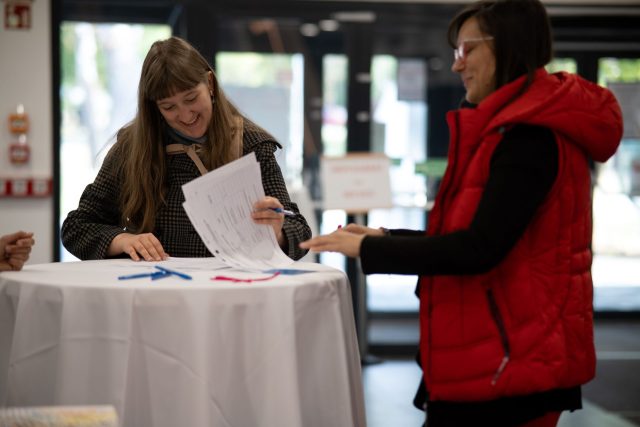
Csütörtök Kicsi 03

Behind the TeatRom festival’s communal experiences, a longer-term process also emerges: culture not only fosters encounters, but can also serve as a means of strengthening local communities. But how can long-term collaborations be built on these encounters, and what can endure even after the project has ended? Márton Beke, an expert in community and local development, shares his experiences from SPARSE Plus and his thoughts on the project’s outcomes.

I joined this year’s TeatRom Festival in Alsóvadász. When we arrived, the performers of “Cigányváros” (Roma town) were already getting ready for a stage reading. They had been rehearsing for four days, bringing together children from the village and amateur and professional adult actors from the TeatRom team. As the start approached, there was a sense of excited anticipation, punctuated by the occasional nervous laugh. Then the play began. Balázs, the director, was giving the actors instructions – which is perfectly acceptable during a stage reading. But this actually made the play feel even more alive. It is an inspiring story about a good-hearted nobleman, Archduke Joseph, who wanted to settle the Roma, who were still travelling at the time. He offered the children a school, the adults work, and the community a town of their own. The initiative met with limited success, yet the lessons it offers remain relevant to this day. After the performance, we discussed these lessons with a few local residents. Would a Roma town be a good thing today? What are the benefits and challenges of Roma and Hungarians living together? What does it take to live a decent life, and what brings to the surface the tensions lurking in the deeper layers of society?

The next day, we were in Sajókaza. Loads of children were waiting for Ki, mit tud? (Who Knows What? – talent show). Some were there to perform, others to cheer on their friends. We invited two actors from Teatro Tascabile di Bergamo to join the judging panel, and they were enchanted by the children’s courage and their love of being on stage. The Italian company’s performance, held in the enclosed space of the local community centre, was even more powerful than it had been the previous day on the open-air stage in Alsóvadász. As the children and their parents eagerly awaited the results of Ki, mit tud? (Who Knows What? – talent show), they laughed heartily throughout the performance, while we, as the judging panel, tallied up the scores of dozens of performers. Once the results were announced, the crowd quickly dispersed. Understandably so: it was getting late.

Thursday was also the day of the SPARSE+ closing conference. While the Ki, mit tud? (Who Knows What?) talent show competition was taking place in Borsodbóta amid rain that alternated between drizzle and downpours, alongside another performance by Teatro Tascabile di Bergamo, we took stock of the achievements, joys, challenges and solutions of the past three years. The performances and discussions at the conference were exciting, but the dinner conversation was even more so. Among other things, we talked about the purpose of everything we had achieved through the project. Was it to bring more theatre performances to rural communities? To help more people encounter theatre? Or, ultimately, to contribute to a more collaborative society – one where people can discuss shared concerns, where individual performances become catalysts for conversation and collective action, and where communities can reflect together on what they have accomplished? So, is theatre the goal or the means? In this discussion, we cast our vote for the latter.

The final day, Friday, brought a rousing closing party. In Szendrőlád, as every year, more than a hundred people turned up to watch the performance. Before that, there was another edition of Ki, mit tud? (Who Knows What? – talent show), featuring not only solo acts but also group performances: poems, songs and choreographed routines. Some performers were called back for an encore by the audience. Local stars were born – or perhaps they had been born some time ago and were simply taking the stage once again. Teatro Tascabile di Bergamo was a huge hit here, too. From the benches at the front of the stage, you could barely see the performance because so many people had crowded in front of it. They were laughing and screaming. Next up was Konzi Rajkó’s band, followed by Kálo Drom. For me, this year’s TeatRom Festival came to an end with all of us singing along with them.
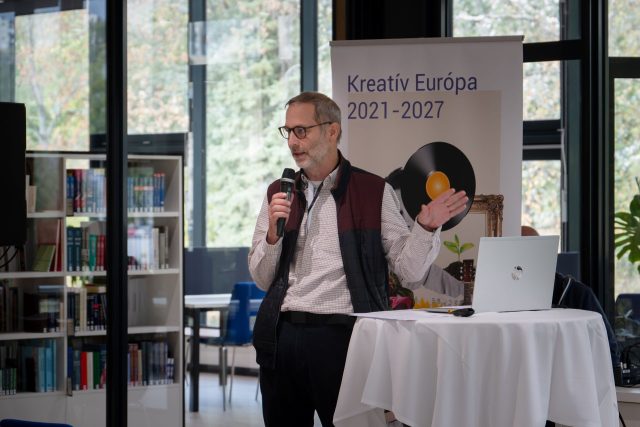
Csütörtök Kicsi 41

En Co Fundedbytheeu Rgb Pos

SPARSE Plus is a project co-funded by the Creative Europe programme of the European Union.
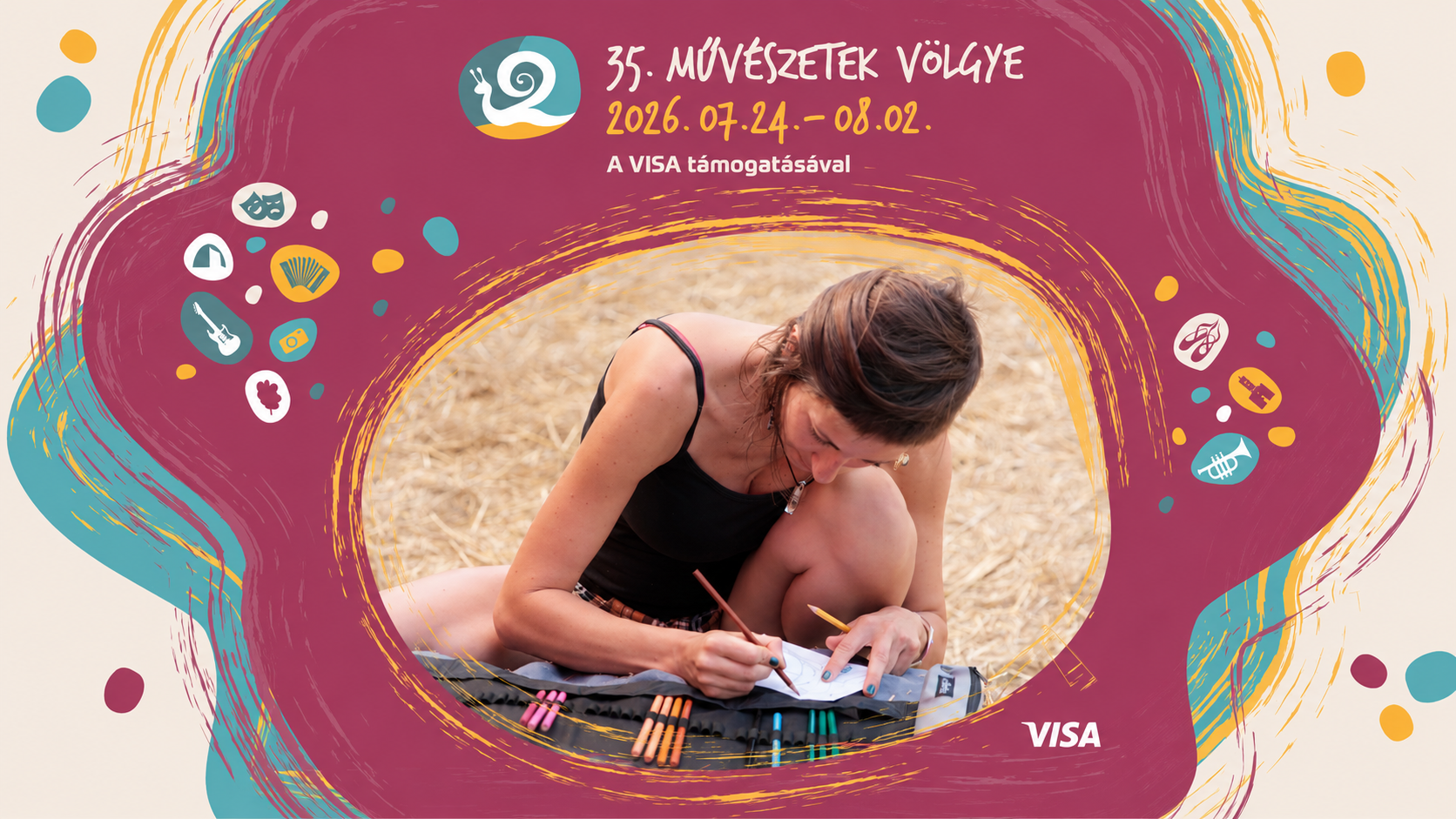
Meet us at the 35th Valley of Arts Festival!

This year’s programme includes a community sewing workshop, plant dyeing and jewellery-making workshops, a community brunch, a book launch, documentary screenings, inspiring conversations, and a special participatory performance. Whether you drop in for a quick visit between concerts or spend an entire afternoon with us, we hope you’ll leave with experiences that stay with you long after the festival ends.

Below you can find the detailed programme: https://www.muveszetekvolgye.hu/location/1157

Tickets: https://www.muveszetekvolgye.hu/ticket


28 July

>> From 5:30 PM (Kapolcs, Aktív Magyarország Stage – Pajta Mozgó)

Shared Futures – Art, communities and sustainability

A Sustainable Future for Culture – A Shared Vision or a Distant Goal?

Panel discussion

The Shared Futures project is built around structured dialogue between the cultural and creative sectors, communities, and environmental stakeholders. The discussion explores how participatory processes and collective vision-building can contribute to creating a more sustainable, inclusive, and resilient cultural ecosystem.

Participants:

Natália Oszkó-Jakab, Festival Director of the Valley of Arts

Vasco Guia de Abreu, Creative Coordinator at Sciaena

Judit Kun, freelance strategic researcher and one of the selected “Social Dreamers”


Moderator: Barna Petrányi, Founder and Managing Director of Pro Progressione

The discussion will be held in English.


29 July

>> 12:30–2:00 PM (Kapolcs, Aktív Magyarország Stage – Pajta Mozgó)

Listening to What is Alive

Panel discussion

What happens when nature becomes not only a source of inspiration, but also an equal creative partner? Hungarian artists and international professionals discuss how we can think and create together with the living world around us, offering new perspectives on the relationship between people and nature.

Moderator: Bálint Antal, Project Manager at Pro Progressione

The discussion will be held in English.

>> 3:00–6:00 PM (Kapolcs, Main Square, Pro Progressione Tent)

Upcycle Your Emotion – Community Sewing Workshop with Pinkponilo

Pinkponilo is taking its community sewing workshop outdoors this time, bringing sewing into green spaces and creating together under the open sky. Inspired by the internet’s “sewing in extreme places” videos, we’re breaking sewing free from homes, boxes, and procrastination. We don’t want to wait for the perfect moment, the perfect equipment, or the perfect weather anymore.

Bring along your T-shirt, shirt, or any other garment and transform it together with us:
• create your own patch
• sew on threads, buttons, and textile details
• creatively redesign your clothing
• screen-print a “Budapest Regimes” design or another graphic created by Vörös Réka Studio

Throughout the workshop, participants will learn creative sewing and upcycling techniques while giving their clothes a new life. The Pinkponilo team will provide inspiration and guidance, while Vörös Réka Studio will offer screen-printing with pre-made designs. The programme aims to encourage creative self-expression, promote sustainable clothing practices, and strengthen the experience of creating together as a community.


30 July

>> 12:00–6:00 PM (Kapolcs, Main Square, Pro Progressione Tent)

Sári Hajgató – HelloBotanika Plant Dyeing Workshop

Discover the vibrant colours hidden inside plants! In this relaxed and creative workshop, you can paint with colourful inks made from plants on premium watercolour paper. Create a greeting card, a miniature artwork, or a unique gift tag – and of course, take it home with you.

As you paint, you’ll also explore the fascinating world of natural dyes: discover how wild plants, cultivated species, and even everyday kitchen leftovers can be transformed into natural pigments. You can also experiment with playfully transforming colours and experience first-hand the surprising colouring power of plants.

The workshop is not only a relaxing creative activity, but also an inspiring experience that invites you to see the plants around us from a whole new perspective.

The workshop is open to all ages, and no previous experience is needed. Participation takes place in approximately 20-minute sessions, so you can easily join at any time.


31 July

>> 12:30–2:00 PM (Kapolcs, Main Square, Pro Progressione Tent)

Community Brunch

During this tasting and conversation, you’ll discover the exciting local flavours of the Balaton Uplands, while also exploring the vulnerability of the region and projects working towards social and ecological sustainability.

>> 3:00–7:00 PM (Kapolcs, Main Square, Pro Progressione Tent)

ZEMSE Design: Jewellery Making Workshop

If you’d love to create a piece of jewellery of your own design, join this exciting workshop led by Emese Zentai, founder of ZEMSE Design!

During the workshop, you can make your own rings and bracelets. You can choose from pre-made shapes, or cut out your desired shape based on your own idea. Throughout the workshop, we’ll sand, file, and hammer the metal step by step to create a truly unique piece of jewellery.

The workshop lasts approximately 1 hour.

We provide all tools, materials, fittings, and, of course, a good mood.


1 August

>> 1:00–2:00 PM
The Book of Dreaming book launch (Kapolcs, Main Square, Pro Progressione Tent)

The The Book of Dreaming is an unconventional guidebook that invites readers to discover the city through children’s eyes, through their personal experiences, observations, imagined stories, and unique perspectives.

During the two-hour event, participants can gain insight into the process behind the creation of the book and discover the creative and participatory methodology developed and led by London-based artist duo Andy Field and Beckie Darlington throughout the project. The programme is more than a book launch: it is a community gathering and an inspiring conversation about children’s imagination, our connection to the city, and the power of storytelling.
The event is open to all ages and warmly welcomes anyone curious to explore how children see Budapest and how their own stories and visions of the future can make them authors of the places they inhabit.

>> 2:00–4:00 PM

Plant Pigment Printmaking Workshop
During the workshop, participants will be introduced to the basics, tools, and techniques of creating alternative prints. The main focus of this two-hour session is creative experimentation with simple geometric elements, brought to life by the unique colours of natural, plant-based printing pastes. Participants can create small, one-of-a-kind paper prints using different surfaces, geometries, and exciting compositional solutions.

4d117519 F8b1 47fb Baa2 F3dfdc1698e7

>> From 3:00 PM onwards (Kapolcs, Main Square, Pro Progressione Tent)

Wild Water Country – Learning to Live with the Tisza

Jeti Mozi, in partnership with the Hungarian Documentary Association, presents Bartha Máté and Illés Zsófia’s short documentary film Wild Water Country (Vadvízország). The lush, dark-green forest along the winding Tisza River hides a unique world. This jungle-like, dense forest is divided by tiny plots of land and orchards, as well as small fishing huts built on stilts. The side of the flood protection dyke facing the river is regularly flooded by the Tisza, yet the people who live and work here do not see this as a hardship, but as a gift of life-giving water. While the settlements on the other side of the dyke are increasingly affected by hot, dry, drought-stricken weather, here we encounter the richness of nature. The people featured in Wild Water Country – fishers, anglers, water-retention experts, and perhaps the last floodplain farmers – guide us through this remarkable landscape and share their experiences of living with the Tisza.

The film was produced for the Hungarian Ethnographic Museum’s MADOK-filmek III programme.

>> From 4:00 PM onwards (Kapolcs, Main Square, Pro Progressione Tent)

Art on Tour – SPARSE+ Short Films

The short films of the SPARSE Plus project invite you behind the scenes of rural touring. Local organisers, artists, and audiences share what it means to them when performing arts finally reach smaller rural communities, where opportunities for similar cultural experiences are less frequent. Stories about how culture becomes a shared experience and brings people closer together.

>> 5:00–5:30 PM (Kapolcs, Main Square, Pro Progressione Tent)

Bid-e-Majnun (Weeping Willow)

Participatory performance

Zahra Fuladvand’s Bid-e-Majnun (Weeping Willow) is a site-specific development of Between Homes, originally presented in the Border Situations exhibition. While the earlier work featured upside-down roots suspended in the exhibition space, symbolising the fragility of uprooting, migration, and belonging, the new performance introduces cascading willow branches that also embody the possibility of connection and taking root in a new place.

A recurring element in the artist’s performances, the mirror – as in the Between Homes performance – serves as a tool for confrontation, self-reflection, and personal encounter. By reflecting the participants’ faces, it dissolves the boundaries between performer and audience, and between the familiar and the unfamiliar.

The Persian term Bid-e-Majnun in the title means “weeping willow.” As a tree that is also native to the Hungarian landscape, it serves as a cultural link between the artist’s Iranian heritage and her life in Hungary. Drawing on the experience of moving between two cultures, the performance explores not only the uncertainty of finding one’s place, but also the possibilities of encounter, connection, and belonging to more than one place.

The performance is in English.


We reserve the right to change the programme. 

En Co Funded By The Eu Pos (1)

The event is co-funded by the Creative Europe Programme of the EU. Views and opinions expressed are however those of the author(s) only and do not necessarily reflect those of the European Union or the European Education and Culture Executive Agency (EACEA). Neither the European Union nor EACEA can be held responsible for them.

The TIDAL ArtS project is funded by the European Union under Horizon Europe research and innovation programme.

En Co Funded By The Eu Pos

The LIFE Bauhausing Europe project has received funding from the European Union’s Life programme under grant agreement no 101113886.

En Fundedbytheeu Rgb Pos

The performance is funded by the European Union’s Citizens, Equality, Rights and Values Programme of the European Union.

Nka 2023 Angol

With the support of the National Cultural Fund.

New European Report Reveals How Public Funding Reaches Rural Performing Arts

Produced by Chloe Sustainability, with  SPARSE Plus partner and advisory group contributions, the report was undertaken to understand how performing arts funding reaches rural areas across Europe.

It maps existing disparities and identifies practical changes that could improve opportunities for communities beyond urban centres.

Based on available recorded data, the analysis shows that predominantly rural territories consistently receive the smallest share of recorded national funding; with rural areas accounting for a significant
proportion of the population while attracting only a limited share of public funding for the performing arts.

Differences also emerge between artforms; music benefits from stronger funding support and presence in rural areas while theatre and dance are particularly under-represented, raising concerns about the diversity of professional cultural opportunities available outside city areas.

The study suggests that rural disadvantage often stems less from formal eligibility than from the practical conditions under which organisations operate, making supposedly open funding schemes difficult to access in practice.

The findings underline the importance of rural touring networks and support mechanisms that address the real costs of mobility, coordination and hosting. The study outlines a series of practical adjustments that could help ensure that access to culture does not depend on where people live.

“All rural communities around Europe deserve professional performing arts opportunities!” – Daniele Sepe, Deputy Director of AMAT ( SPARSE Plus Lead Partner).

“Research is important for rural touring – it makes the invisible visible!” – Ralph Lister, Executive Director of Take Art ( SPARSE Plus consultant).

“Culture should not be concentrated only where funding structures are strongest. Rural communities are
places of creativity, participation and innovation, and public support systems should recognise their value
and potential.”  – Adriana Světlíková, Director, Nova Sit ( SPARSE Plus partner)

The full report, Public Funding for the Performing Arts in European Rural Areas, is available here.

En Co Funded By The Eu Pos (1)

SPARSE Plus is a project co-funded by the Creative Europe programme of the European Union.The opinions and statements contained herein reflect the views of the author(s) and do not necessarily reflect the official position of the European Union or the European Education and Culture Executive Agency (EACEA). Neither the European Union nor the EACEA can be held responsible for them.

European cultural professionals gather in Miskolc to celebrate the future of rural performing arts

Hosted by Pro Progressione, the conference will bring together representatives of more than 15 organisations from ten European countries – including Hungary, Italy, Poland, Lithuania, Estonia, the Czech Republic, Slovakia, Germany, Portugal and the United Kingdom – to reflect on four years of international cooperation dedicated to improving access to high-quality performing arts in rural and geographically remote communities.

The conference’s main public programme will take place on 24 September at the University of Miskolc, showcasing the project’s achievements in international touring, artist mentoring, audience development, research and network building. Through keynote presentations, panel discussions and case studies, participants will explore how culture can strengthen local communities and contribute to sustainable regional development.

Beyond celebrating the project’s results, the conference also looks ahead. Participants will discuss current challenges facing rural culture across Europe, share practical experiences from local communities, and explore new opportunities for international cooperation. Researchers, artists, rural promoters and cultural organisations will exchange knowledge on building resilient cultural networks that extend beyond major urban centres.

 “SPARSE Plus has shown that international cooperation can make high-quality performing arts accessible far beyond cities. The partnerships and knowledge created over the past four years provide a strong foundation for continuing to strengthen cultural life in rural communities across Europe.” says Daniele Sepe, Deputy Director of AMAT – Associazione Marchigiana Attività Teatrali, the lead partner of the SPARSE project.


SPARSE Plus Celebrating Conference

Conference Day at University of Miskolc, Hungary: 24 September 2026

Read more about the project: https://www.sparse.eu/

The Celebrating Conference is organised within the SPARSE Plus project, which is co-funded by the Creative Europe programme of the European Union.


READ THE FULL PRESS RELEASE HERE

OPEN CALL – Career Pathfinder Training (Romania) – THIS CALL IS CLOSED!

📅 Application deadline: 28 June 2026
📩 Selection results: 1 July 2026

About the project:

Career Pathfinder is a hands-on international training designed to support youth workers in helping young people make informed decisions about their future. The programme focuses on self-discovery, goal setting, and practical career orientation tools based on non-formal education methods.

It especially addresses the needs of young people with fewer opportunities and aims to strengthen their integration into education and the labour market.

Practical details

📍 Location: Iași, Romania
📅 Dates: 18–22 July 2026 (travel days: 17 & 23 July)
👥 Participants: 4 from Hungary

👥 Language of the training: English

Who are we looking for?

-25+ years old

-At least 1 year of experience in youth work or non-formal education

-Actively working with young people (NGO, community, school, etc.)

-Interested in career guidance, coaching, and personal development

-Open to learning, reflection, and international collaboration

-You agree to apply what you have learned after the training

What will you gain?

-Practical tools you can directly use in your work (e.g. GROW model, ikigai, coaching methods)

-A strong international learning experience

-Exchange with youth workers from other countries

-Contribution to a shared “Career Orientation Kit”

Costs

✈️ Travel costs covered by Pro Progressione

🏨 Accommodation and meals are fully provided during the programme

How to apply?

If this opportunity speaks to you, apply via the form: (link) and join an inspiring, hands-on international learning experience!

https://forms.gle/wRFviEHk4j12vpDU7

“The emphasis is not on expectation itself, but on trust.”

As a young female composer, do you feel there are specific expectations placed on you in the industry? If so, how do they affect you?
As a composer, most of my work is done on my own, so I usually have to live up to my own expectations. But that depends largely on the scope of the projects and commissions. For example, if I have to write an opera, my expectations for the work will be completely different from when I’m composing a piece for an ensemble. When it comes to commissions for new works, I often feel that the commissioning musician, festival, or organizer is placing their trust in me. In my opinion, this implies that a certain standard is expected, but the emphasis is not on expectation itself, but on trust.

Where did you first come across the call for applications for the Mind the Gap project? What was it about the call that appealed to you the most, and what made you ultimately decide to apply?
I first heard about it through the Transparent Sound New Music Festival. That alone was enough to capture my interest. During my studies at the Liszt Ferenc Academy of Music in Budapest, I was actively involved in the festival as a composer, concert organizer, and, not least, as a member of the audience. However, once I continued my career abroad, that connection was severed. I had always followed the festival’s activities from afar and really longed to be part of it again someday. When I came across the call for submissions, I felt that if I were selected for the project, my return would be accompanied by a very exciting creative process.

The Cadavre Exquis collective composition form creates a unique creative situation from the outset. Is this your first time encountering this method, or do you already have experience with collective composition?
I’ve been involved in collaborative composition on several occasions, but so far I’ve always been able to hear the entire piece, not just the last 30 seconds.

You joined the production as the fourth member. How did what you had “inherited” from the piece by that point affect you? Did you prefer to continue a musical logic that was already underway, or did you consciously want to steer it in a new direction?
Perhaps the best way to describe it is that it was as if I had walked into a house that was already furnished, which I then had to adapt based on my understanding of the surroundings and the objects within it.

What inspired you most during the creative process: the other composers’ material, or the framework?
The instrumental ensemble itself. I really love writing for ensembles, and I’m lucky enough to often work with ensembles of different configurations. This time, too, I was working with a combination of instruments I had never used in this way before, so it was very inspiring.

How did you strike a balance between your own musical voice and fitting into the collective whole?
I think the reason a composer doesn’t write this piece as a single work but as a series of connected sections is precisely because its uniqueness lies in the absence of strict cohesion; instead, each person’s own voice and ideas come to the fore, like a mosaic for which we compose bridges at the beginning and end. That is why I made a conscious effort to let my own voice come through, not in isolation, but as a natural continuation of the preceding passage.

Was there a point during the composition process when you found the collaborative process particularly liberating?
The beginning. It was incredibly liberating not to have to start the piece myself; the beginning was already set, and all I had to do was continue from there.

Was there ever a time when thinking within a collective framework actually hindered your work rather than helping it?
It didn’t make my work particularly difficult, but I did have to take into account certain circumstances dictated by the details of the previous piece.

How was this project different from composing a “traditional,” standalone piece?
There was a very refreshing sense of mystery to it. Dramaturgy and formal thinking are very important to me, even if I don’t always work within strict formal constraints. However, since I wasn’t familiar with the previous parts of the series this time around, from a dramatic standpoint I was, in a sense, left hanging, and that presented a real challenge.

What have you taken away from this creative process: has it changed your perspective on composing or collaborative thinking today?
Perhaps that there are countless forms and methods of composition, including some that we don’t use every day. It’s worth keeping this in mind, because we may later discover similar, or even more exciting, artistic approaches that shake us out of our usual creative routines.


! Ng07088Born in 1996, Abigél Varga completed her composition studies at the Liszt Ferenc Academy of Music in Budapest  and the University of Music and Performing Arts Munich under the guidance of Moritz Eggert.

Her works have been performed at several festivals and venues, including the Neuköllner Oper Berlin, Lucerne Festival, Kronberg Academy Festival, aDevantgarde Festival Munich, and Transparent Sound New Music Festival Budapest.

She has been awarded many scholarships and residencies, including participation in the Deutsche Bank Foundation’s Akademie Musiktheater heute program and a residency at the Cité Internationale des Arts Paris.

In 2025 she won the Fanny Mendelssohn Kompositionspreis. In 2026 she was awarded for the Zoltán Kodály Scholarship.

Abigél Varga’s official website: https://www.abigelvarga.com/music

Find all artists and their introductions at: https://pianoandco.fr/


En Co Funded By The Eu Pos (1)

Funded by the European Union. Views and opinions expressed are however those of the author(s) only and do not necessarily reflect those of the European Union or the European Education and Culture Executive Agency (EACEA). Neither the European Union nor EACEA can be held

Final Presentation – Academy for Actors of Social Change 2026

Over the course of three 3-day workshops, our international participants explored the power of artivism—the intersection of art and activism. Through movement-based and social theatre practices, and visual creation, they developed artistic responses to contemporary social issues. And now it’s time to share what they’ve learned, experienced, and created together!

Expect inspiring performances, creative reflections, and a glimpse into how art can drive social change.

📍 Location: Villa Székely – Leányfalu, Mókus u. 5, 2016
🎟  Free entry – everyone welcome!

En Co Funded By The Eu Pos (1)

The Academy project is co-funded by Erasmus+ programme of the EU and Tempus Public Foundation.

Learning from Each Other: A Job-Shadowing Journey with Sparse PLUS

For a few days, we gained insight into the day-to-day work of our partner organisation, the Shoshin Theatre Association: we observed, asked questions, exchanged experiences, and gained new perspectives and ideas from one another along the way. It was not a conference or a sightseeing trip, but a genuine encounter with people, communities, and active cultural initiatives.

673810712 817490597787455 6262499653379791588 N

On the first evening, we attended the Hungarian Theatre of Cluj’s production of Romeo and Juliet, directed by Attila Vidnyánszky Jr. The following day, under the guidance of Csongor Köllő, we explored Cluj-Napoca and learned more about the work of Shoshin. It was a real pleasure to visit the ZIZ – Art and Social Area community space and hear about how they build their cultural and social programmes through local connections and collaborations.

700641100 985298340580525 3405806143431785007 N

Our journey then continued to Cehu Silvaniei, where György Bodea welcomed the team. During a walk through the town centre, we learned more about the area’s history, public spaces, and cultural life, before attending presentations at the Gheorghe Pop de Băseşti Technical High School on the history of Cehu Silvaniei, as well as local theatre activities and the history of PADIF.

699956527 3085596671807558 4194540997103641290 N

Although the exchange of experiences among the promoters did not always happen in formal discussions, the time we spent together still provided all of us with a great deal of inspiration and encouragement. It was reassuring to see how, despite coming from different places, we are all working with similar questions, challenges, and community goals.

Thank you to all the organisers and participants for your hospitality, openness, and collaborative spirit!

696448491 1852156442120380 2552573896991091085 N

SPARSE Plus is a project co-funded by the Creative Europe programme of the European Union.

Lights On Rural Touring – Final Conference of the SPARSE Plus Project

Over the past years, the SPARSE Plus project has brought together cultural organisations, artists, promoters, researchers, and local communities from across Europe to strengthen access to performing arts in rural and underserved areas.

The conference will present the project’s results, experiences, and research findings, while opening a discussion on the future of rural culture, international touring, community engagement, and sustainable European cooperation.

Join the conversation and help shape a more connected, inclusive, and accessible cultural future for rural Europe.


SAVE THE DATE!

Date: Thursday, 24 September 2026
Venue: University of Miskolc Library, 1 Egyetem Street, Miskolc-Egyetemváros, H-3515
Language: English
Participation is free, but registration will be required. 
Please register here by 23 September 2026. (Places are limited.)

The conference is recommended for artists, cultural organisers, festival curators, community leaders, policymakers, researchers and everyone interested in rural cultural development, audience engagement and international cultural cooperation.


Programme

Thursday, 24 September 2026

9:30–10:00 Registration and welcome coffee

10:00–12:30 Morning Session – Celebrating SPARSE Plus
10:00–11:00 Opening Session and Welcome Addresses

Welcome remarks from:

  • Barna Petrányi, Managing Director, Pro Progressione (HU)
  • József Tóth-Szántai, Mayor of Miskolc
  • Prof. Dr. Zita Horváth, Rector, University of Miskolc
  • Gábor Mondik, Creative Europe Desk Hungary
  • Balázs Simon, Festival Director, TeatRom Festival – Cultural work in rural Borsod

11:00–12:30 SPARSE Plus Results and Achievements

12:30–13:30 Networking lunch

13:30–15:00 Rural Experiences – Stories from the Field

Presentations and case studies exploring cultural work in rural communities:

15:00–15:30 Coffee break and networking

15:30–17:00 Research Findings and the Future of the SPARSE Network

  • Results of SPARSE Plus surveys – Take Art (UK)
  • Future directions of the SPARSE Network
  • Introduction of potential new partners
  • Roundtable discussion and audience Q&A – Take Art (UK)

17:00–17:30 Closing – Pro Progressione (HU)


ℹ️The organisers reserve the right to make changes to the programme.

The event will be recorded and photographed. The data will be used for information purposes, dissemination of results, and promotion of the project.

Missed the SPARSE Plus Celebrating Conference in Miskolc, or would you like to revisit the discussions?

Watch the full conference recording and discover the project’s results, inspiring rural touring practices and experiences from across Europe!

📹 Watch the full recording: https://www.youtube.com/watch?v=q_nFiB50hj8


Learn more about the SPARSE Plus project: https://www.sparse.eu/


Project partners:
Consultant:
Take Art (UK)


SPARSE Plus is a project co-funded by the Creative Europe programme of the European Union.The opinions and statements contained herein reflect the views of the author(s) and do not necessarily reflect the official position of the European Union or the European Education and Culture Executive Agency (EACEA). Neither the European Union nor the EACEA can be held responsible for them.

LET THERE BE CALM! – Public-Life and Well-being-Enhancing Calming Pillow Sewing Workshop with Regina Sárvári.

During the workshop, we will transform the public and political messages surrounding us, which become increasingly suffocating and tension-filled as the elections approach, into personal and positive content through warm-up exercises and collective creation.
Using recycled, colorful textiles and yarns, we will create approximately 10×10 cm aroma pillows filled with dried herbs that help relieve tension and support meditation and rest. Instead of negative or emptied-out slogans, participants will sew words or phrases onto their own pillows that are meaningful, calming, or newly reinterpreted for them. In this way, everyone will be able to take home a unique, handmade object.

Leap Dsc 5187 Másolat

Leap Dsc 5238 Másolat (1)

The workshop is also an opportunity for shared reflection, conversation and slowing down within a small community — a chance to reinterpret the political noise around us together and transform it into something entirely different.

Leap Dsc 5064 Másolat (1)

🧵 All necessary tools and materials will be provided, but if you have any unused textiles at home, feel free to bring them with you.

Facebook event:
https://www.facebook.com/events/923073150360869/?active_tab=discussion

The workshop is an accompanying event of Border Situations, the Budapest exhibition of the LEAP – LEgAcy in Progress: (Re)Constructing European Narratives and (De)colonising Discourses project.
The event is co-funded by the European Union’s CERV program.