Contemporary art and Benedictine heritage: The First Chapter of Sanja Dragutinovic Komatina’s MON-ART Residency

Sanja is one of two artists selected for the MON-ART residency in Tihany, which explores the relationships between contemporary art, Benedictine heritage and the natural environment. Through collaboration with the monastic and local communities, the artists are developing projects that encourage shared creation, ecological awareness and new ways of engaging with the area’s cultural and spiritual heritage.

Studio 1

Based between Budapest and Belgrade, Sanja is an artist, iconographer and conservator-restorer. She graduated in painting and restoration from the University of Arts in Belgrade, where she subsequently taught conservation and restoration for 25 years. She also worked as a guest lecturer in Thessaloniki, Greece, specialised in wall-painting conservation at ICCROM in Rome, and participated in conservation projects in Turkey, Italy and Serbia. Her artwork has been exhibited in Serbia, Hungary and Canada. After decades devoted to conservation and education, she has returned to painting, combining the traditions of icon painting with her own artistic expression.

In Tihany, slowing down and becoming familiar with her surroundings are important parts of this process. Exploring the peninsula, observing its natural environment and learning about Benedictine monastic life help Sanja connect the traditional language of icon painting with the particular character of the place. Conversations with the monastic community also inform the direction of her work.

During the first phase of the residency, Sanja began developing a series of three icons, initially dedicated to Saint Tryphon, Saint Phocas the Gardener and Saint Benedict. Following discussions with the community, the second icon may instead depict Saint Aignan, known in Hungarian as Szent Ányos, the patron saint of Tihany Abbey. Each figure offers a different connection to the monastery, its surroundings and the themes of the project. As Sanja explains, “Lavender will enter each icon differently: as attribute, labour, and space.”

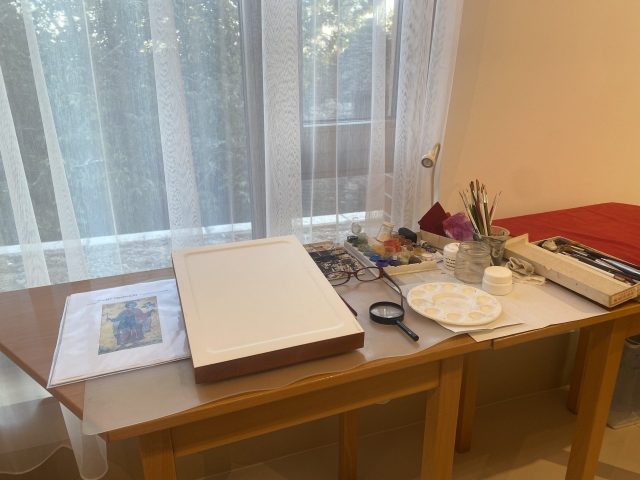
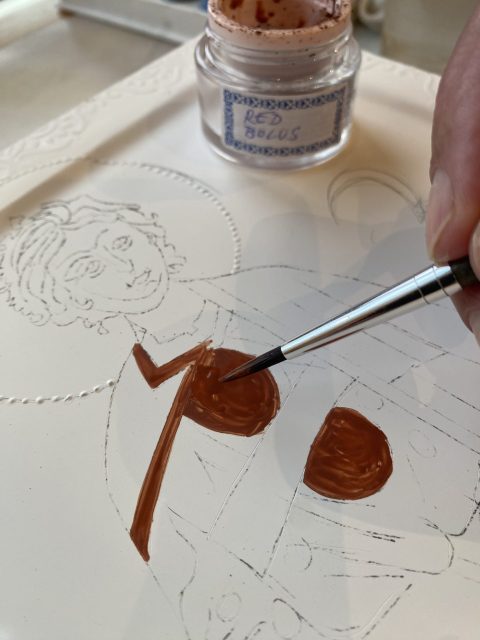
The first icon focuses on Saint Tryphon, traditionally associated with gardens, vineyards and the protection of plants. Working with traditional materials and techniques, Sanja has been preparing the wooden panel, applying gold leaf and gradually building up the first layers of colour. Photographs from the studio document these early stages, offering a closer look at the careful craftsmanship behind the emerging work.

St Tryphon 9 Application Of Bolus (red Chalk)

“My studio in Tihany is where historical research and practical work come together,” she says. The observations gathered outside the studio continue to inform the work within it, connecting her exploration of the landscape and monastic life with the handling of pigments, gold leaf and the painted surface.

The residency also includes plans for opportunities to learn and create together. Sanja will introduce traditional icon-painting materials and techniques, followed by a community workshop in which participants will make small manuscript illuminations. These works are intended to become part of the final residency exhibition, bringing the participants’ contributions into dialogue with her own paintings.

Discover more about Sanja’s artistic practice on her website and Instagram.

The MON-ART project is co-funded by the Creative Europe programme of the European Union.

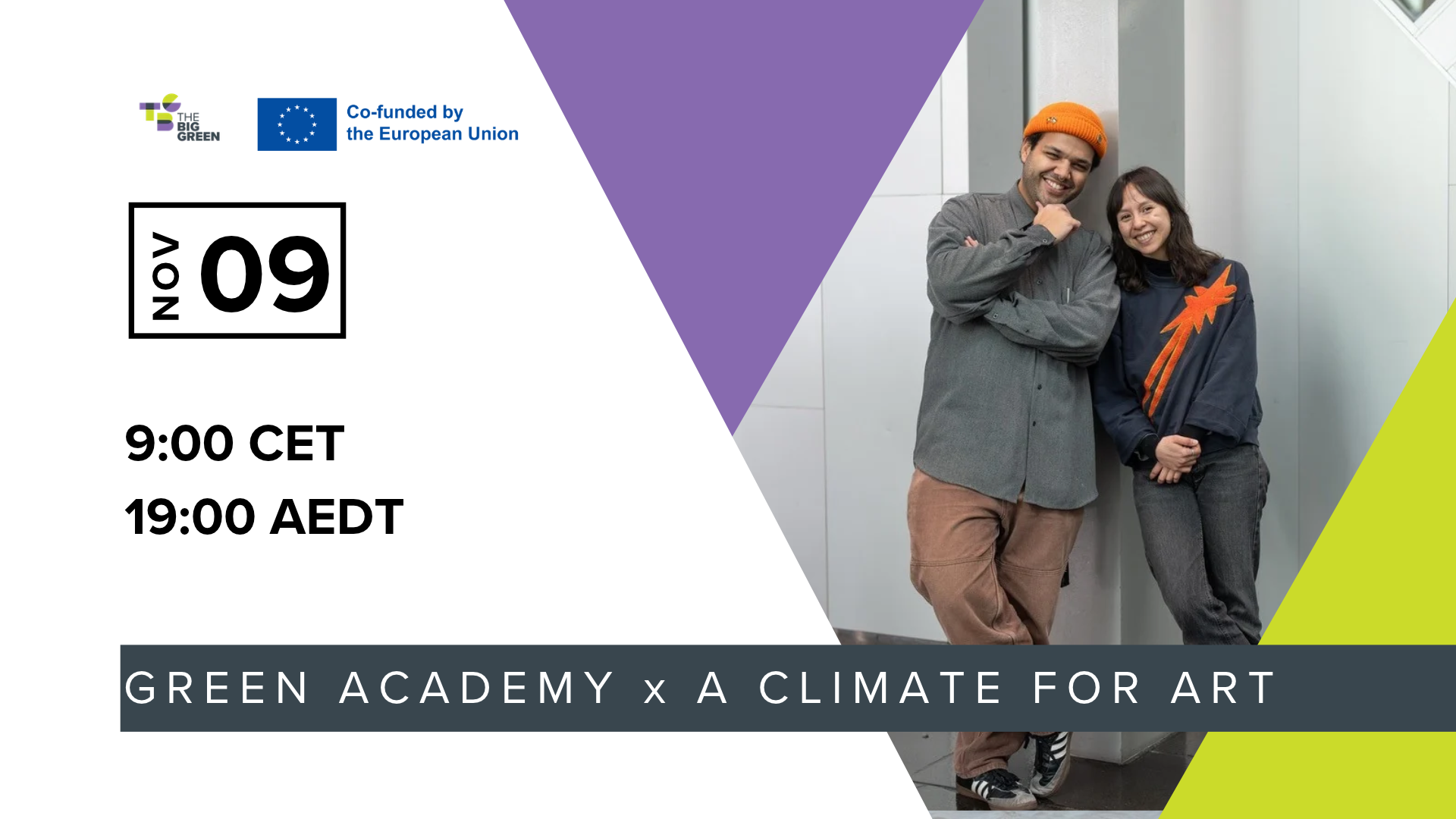
Green Academy Seminar Series 10: GREEN ACADEMY x A CLIMATE FOR ART

Date: 9th November 2026 9am CET / 7pm AEDT
Link to the event: https://us06web.zoom.us/j/81097726744?pwd=KFhZtPGjYxQ3axvPxxBunQy4iZM4Gi.1

To mark the opening of The UN Climate Change Conference (COP31) in Antalya, Türkiye the Green Academy invites the artists/activists Eliki Reade & Lana Nguyen (A Climate For Art (ACFA) to discuss the role of cultural professionals and institutions in the reimagining of an industry divested from fossil fuels. They will introduce some of their strategies, toolkits and how their collaborations inspire cultural institutions to work differently.

They will also introduce their new audio series Cultural Currents that highlights global cultural responses to the climate crisis. The series works to reframe climate discourse as having roots in cultural worldviews, practices and frameworks, and steers listeners towards a wider understanding of what climate response can look like, legitimising culture as a key component of climate work, extending ongoing campaigns for the inclusion of culture at COP31.

Eliki Reade & Lana Nguyen live and work on the lands of the peoples of the Eastern Kulin Nations near Naarm (Melbourne, Australia).

Guests: Eliki Reade & Lana Nguyen
Hosted by Bek Berger

Eliki Reade is an interdependent producer, broadcaster, curator, and artist of Kailoma-Fijian descent. Working across community-led spaces and in climate advocacy, Eliki is led by storytelling, transforming narrative into a vessel for critical connection and action.

He wears multiple creative hats including Program Officer at Naomi Milgrom Foundation, Co-Organiser with Lana Nguyen for A Climate For Art, and a collaborator with Big Four Holiday Camp – Aaron Claringbold, Jack Mitchell and Rebecca McCauley – amongst many other personally fun and exciting projects and loves.

Lana Nguyen is an independent curator, writer and researcher based on Wurundjeri Country with a particular focus on projects that stem from and interact with the politics and cultures of place. She is currently focused on responding to the growing environmental crisis through A Climate For Art, an initiative which brings together people and organisations across the small to medium sector through collective fossil fuel divestment and critical climate conversations.

She is also very interested in place-based, site-responsive projects. Alongside Uncle Peter Swain and Lucas Ihlein, Lana is currently curating the 2028 Cementa Festival, a socially engaged art festival in a regional post-industrial town on Dabee Wiradjuri Country in New South Wales, Australia.

Bek Berger is an Australian-born artist, curator and dramaturg based in Berlin. Her practice explores how curiosity and experimentation can create new forms of connection, collaboration and reciprocity between artists and communities. From 2020 to 2024, Bek curated Homo Novus, the International Festival of Contemporary Theatre in Riga, where she collaborated on Creative Europe projects including ACT (Art-Climate-Transition), THE BIG GREEN and the Nordic-Baltic network FOREST SCHOOL. She was awarded the Saari Residency (Finland) in 2023 and 2025, and received an Australia Council HIAP Residency in 2020.

A Climate For Art (ACFA) is a campaign that unifies the climate response in the arts through divestment and community building. They see the climate crisis as a cultural crisis that requires a cultural response. With a focus on divesting from banks and superannuation companies that support fossil fuels – ACFA is focused on collectivising through tangible actions, as well as growing critical climate dialogues through a community of practice, built from an ongoing series of events, creative projects and gatherings.
https://www.aclimateforart.com.au/

Creative Climate, funded by Creative Australia, is the new national peak body for arts and climate providing leadership, connections, advocacy and access to high-quality resources that support artists, arts workers and arts and cultural organisations and their funders to transition from a carbon economy and adapt to the impacts of climate change.
https://www.creativeclimate.org.au/

The Green Academy and The Big Green project behind is co-funded by the Creative Europe programme of the European Union.

Listening to Tihany: The First Chapter of Edoardo Bosi’s MON-ART Residency

Edoardo is one of two artists selected for the MON-ART residency at Tihany, coordinated locally by Pro Progressione in collaboration with the abbey. The programme brings contemporary artistic practice into dialogue with Benedictine heritage, the natural landscape and local communities. Through this encounter, it invites artists to develop work rooted in the place, with attention to ecological awareness, shared creation and respect for monastic life.

Edoardo Tihany 1

Getting to know a place by listening
Known artistically as edoquarto, Edoardo is an Italian artist, musician and sound designer based in Milan. Born in the UK and raised in Uganda, he works across music, field recording, sound design and experimental listening. His practice explores connections between sound, place, memory and human perception, often combining recorded environments with composed and improvised music.

Tihany offers a setting in which these interests can develop through everyday encounters:
“I’m interested in discovering Tihany by listening rather than simply looking at it. The residency gives me the time to become attentive to the small sounds, silences, voices and rhythms that make a place what it is, and to understand how those sounds change through the people who inhabit it.”

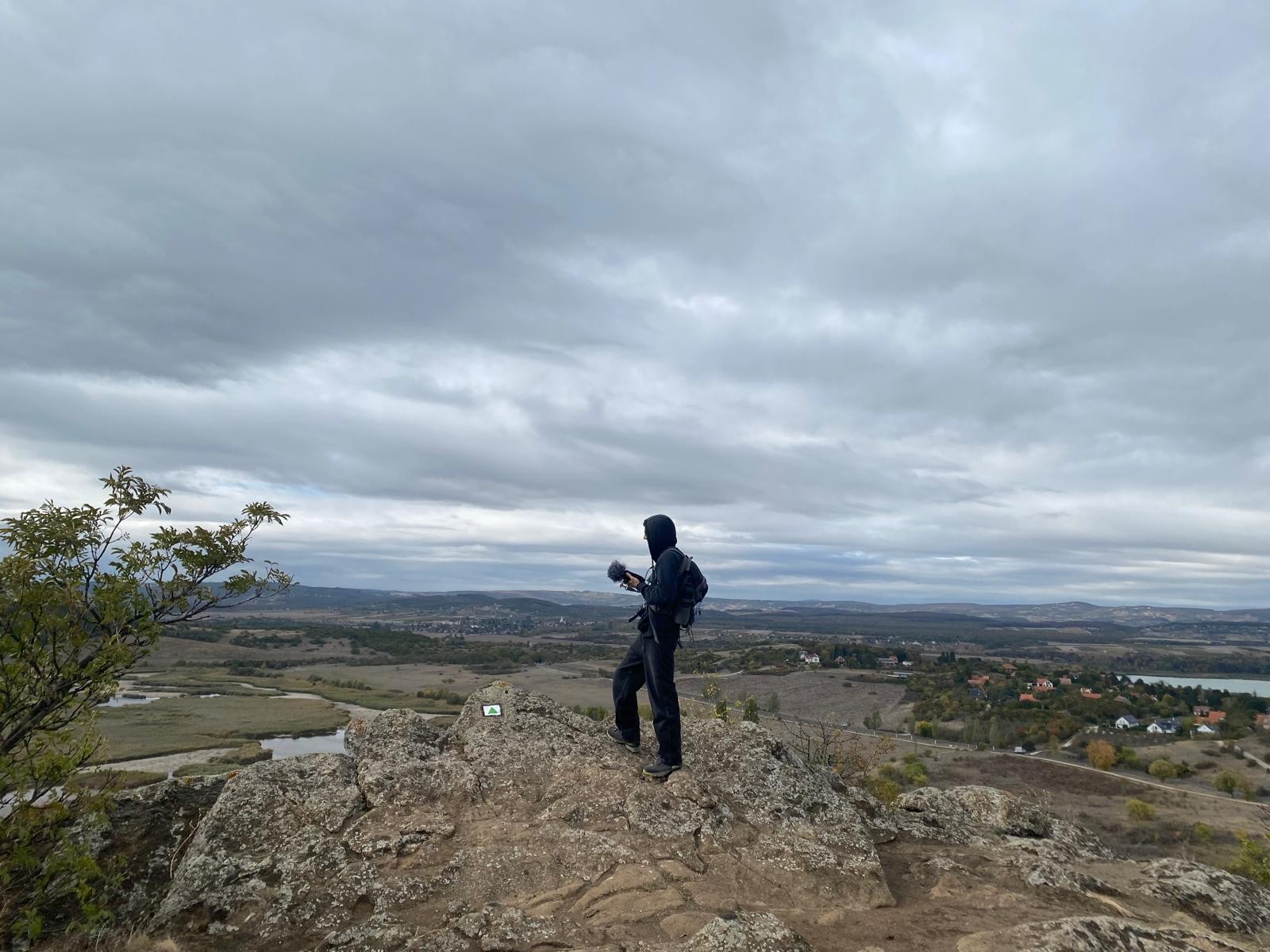
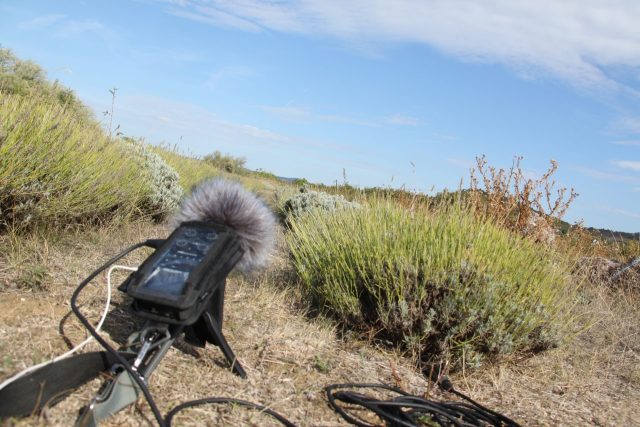
During his first weeks, Edoardo joined the monks for daily prayers and spent time outdoors recording ambient sounds and animals. Moving between the abbey and the surrounding landscape allowed him to become familiar with both the monastic routine and the peninsula’s natural soundscape.

Reflecting on his arrival, he described the experience as a process of “tuning in, recording and recollecting my thoughts daily.” This slower rhythm gave space to listening and reflection, shaping the early stages of his artistic research.

Meeting the community
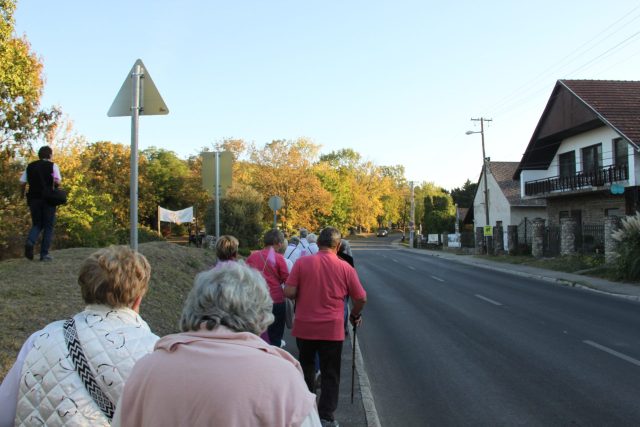
Alongside recording Tihany’s natural environment and prayers with the monks, Edoardo began taking part in local community activities. These included the cancer awareness walk organised by the Levendula Club—an opportunity to participate in the everyday social life of the place hosting him.
Such encounters are central to the residency’s community focus. They allow the artistic process to develop through relationships with the people who live in Tihany, alongside engagement with its landscape and cultural heritage.

Edoardo Tihany 5

From field recordings to composition
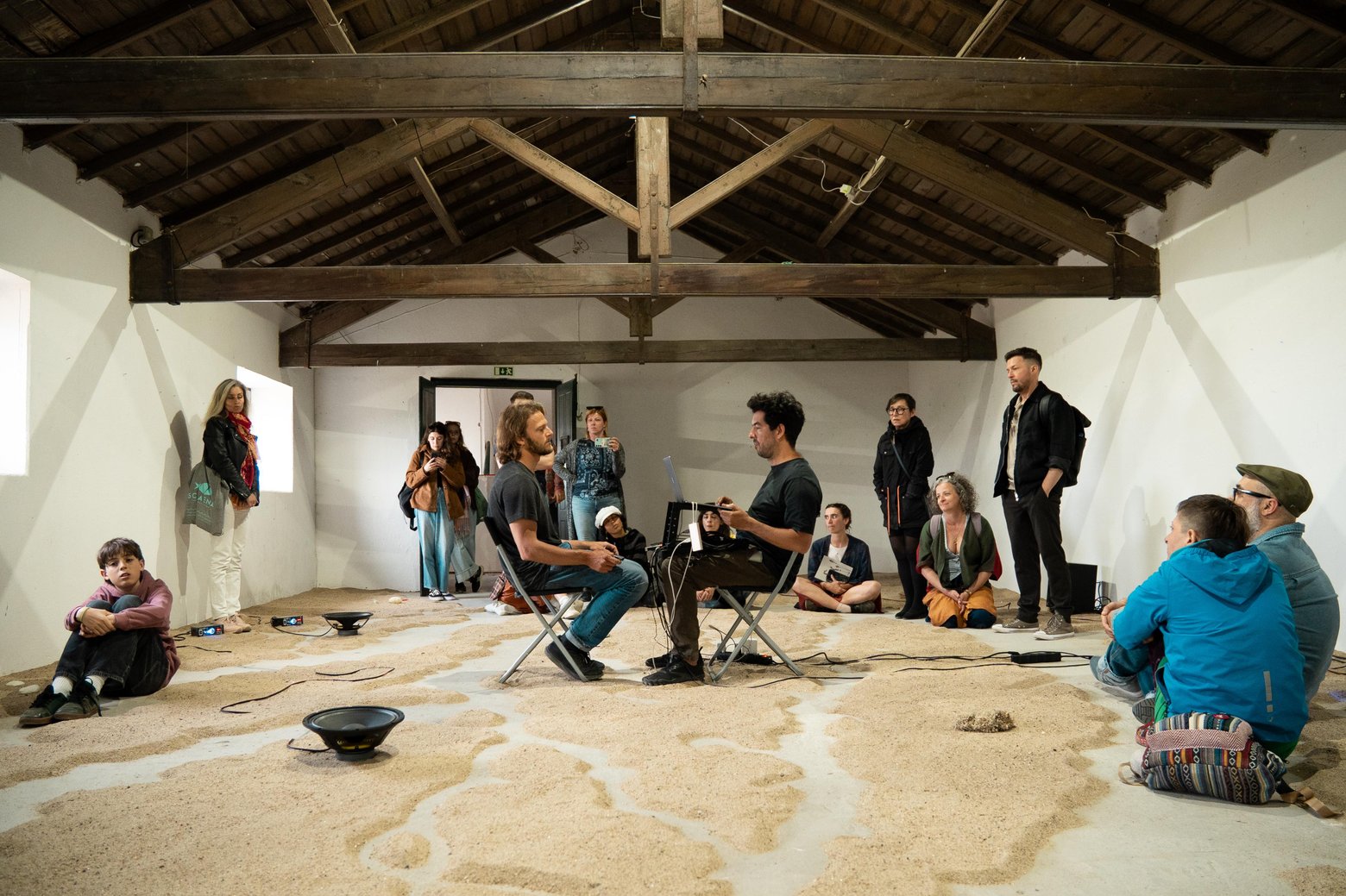
With the first phase complete, Edoardo is now working with the sounds collected during his stay, moving from recording towards composition. He is also exploring possibilities for listening sessions where he could share emerging work and discuss it with the community.

The residency continues through June 2027, leaving time for further artistic development and exchange. This opening chapter has established a starting point: a collection of sounds, encounters and observations from which the work can grow. We look forward to sharing how Edoardo brings these experiences into his music as the residency unfolds.

Discover more of Edoardo’s work at edoquarto.com and follow him on Instagram at @edoquarto.

The Big Green presents The Big Green Catalogue!

Why we are doing this

Over four years of working with artists inside natural heritage sites, classrooms and communities, one thing became clear: the practices we most needed to find were the hardest to find. Artists working with scientists, with acoustic ecologists, with fishermen or foragers or park rangers rarely know who else is doing it, and the institutions that would most benefit from working with them, from national parks and geoparks to museums, science centres and research groups, have no sustained way of knowing they exist. The result is a field that keeps reinventing its own methods, and a set of institutions that keeps assuming no one is available. This catalogue is our attempt to fix that in the simplest possible way: by making the field visible, in one place, permanently.

What the catalogue actually is

An online, open-access catalogue of artists and creative minds working with nature and the natural sciences, hosted on The Big Green website and free to join.

Each entry is a working profile. Alongside your name, disciplines and links, it carries the things that actually let someone understand your practice: the questions and materials you work with, whether sonic, relational, ancestral or ecological, the concrete projects where you have worked them through, the shift you are trying to set in motion, and images of the work itself. Profiles can be browsed and filtered by discipline, by region, and by the kinds of natural-science questions they engage with, so someone looking for an artist working on soil microbiology, or on water and memory, can actually find you.

Each profile also states what kinds of collaboration you are open to – residencies, workshops, talks, exhibitions, research collaborations – so an organisation can see at a glance whether an approach makes sense.

It is permanently open and continuously growing. There is no single deadline and no fixed cohort: profiles are added as they arrive, and the catalogue expands over time.

What being in the catalogue gives you

  • Visibility to the people who commission this work. The Big Green brings a partnership and network reach that few individual artists have on their own: fifteen partner organisations, four natural heritage sites in Romania, Hungary, Portugal and Latvia, and pan-European networks including Interpret Europe, Culture Action Europe, IETM and ELIA, alongside the Climate Heritage Network. These are exactly the organisations that come looking for artists – for commissions, residencies, interpretation projects, conference programmes and co-productions – and we will actively point them towards this platform.
  • A profile that does the explaining for you. Practices like yours are hard to describe in a sentence and tend to fall outside every existing directory: too scientific for arts platforms, too artistic for research networks. Here the in-between position is the entry requirement rather than the obstacle, and the profile is structured to make that legible to a curator, a park director or a scientist who does not already share your vocabulary.
  • Peers you can actually find. The catalogue is searchable in both directions. You are not only visible to institutions, you can see who else is working with the same material, in other countries, from other disciplines, and reach them directly. For many of the artists we have worked with, this has been the part that mattered most.
  • Access to what The Big Green produces. Everyone in the catalogue is invited to the project’s open activities and receives what we publish: the Green Academy seminar series, mini-conferences, and the toolboxes and methodologies developed across the project on art–science collaboration, natural heritage interpretation, ecological learning and evaluation.
  • A stake in something that continues. Four-year projects tend to disperse the moment funding stops. This one is designed not to. The catalogue will keep running after the project closes, and the people in it are the foundation for whatever we and our partners build next.

Where it will be shared
The catalogue lives online from launch, but we will also carry it into the rooms where it can do work: at the closing festival and conference of The Big Green at the Survival Art Review in Wrocław; at the Interpret Europe conference in Nuremberg, gathering over 200 heritage, sustainability and culture professionals; through Culture Action Europe, IETM and ELIA to cultural organisations, policymakers and funders across Europe, through the Green Academy and the project’s toolboxes; and at the scientific and sectoral conferences where the project presents its research on art, behaviour and social change.

Interested? More info on the project’s website!

The Big Green Community

Call For Applications for the EEEMERGING Academy 2027

You can already sign up for our Online Info Session held on September 15th: https://us02web.zoom.us/meeting/register/c_6e81dzQUuSv8rY3GY4QA.

The Academy will bring together 22 young instrumentalists and singers training, working and playing under the direction of the renowned singer and conductor Damien Guillon, with a program which is designed to facilitate collaborative work on a landmark piece: Georg Friedrich Handel’s Dixit Dominus.

When? From June 21 to July 20, 2027 : 2 weeks of training and 2 weeks of European Tour – (travel days June 20 and July 21).
Free of charge! Transportation, meals and accommodation will be provided. The concerts of the tour will be remunerated.

  • To join this training and professional integration program, applicants must:
    Be 30 years old maximum on the day the training begins
    Have a Historically Informed practice of their instrument or singing
    Have completed higher studies at a national conservatory or equivalent institution
    Have previous experience of playing in a group.

For more information on the Academy and how to apply, click here: https://eeemerging.eu/newsroom/call-for-applications-s-eeemerging-ambronay-academy/

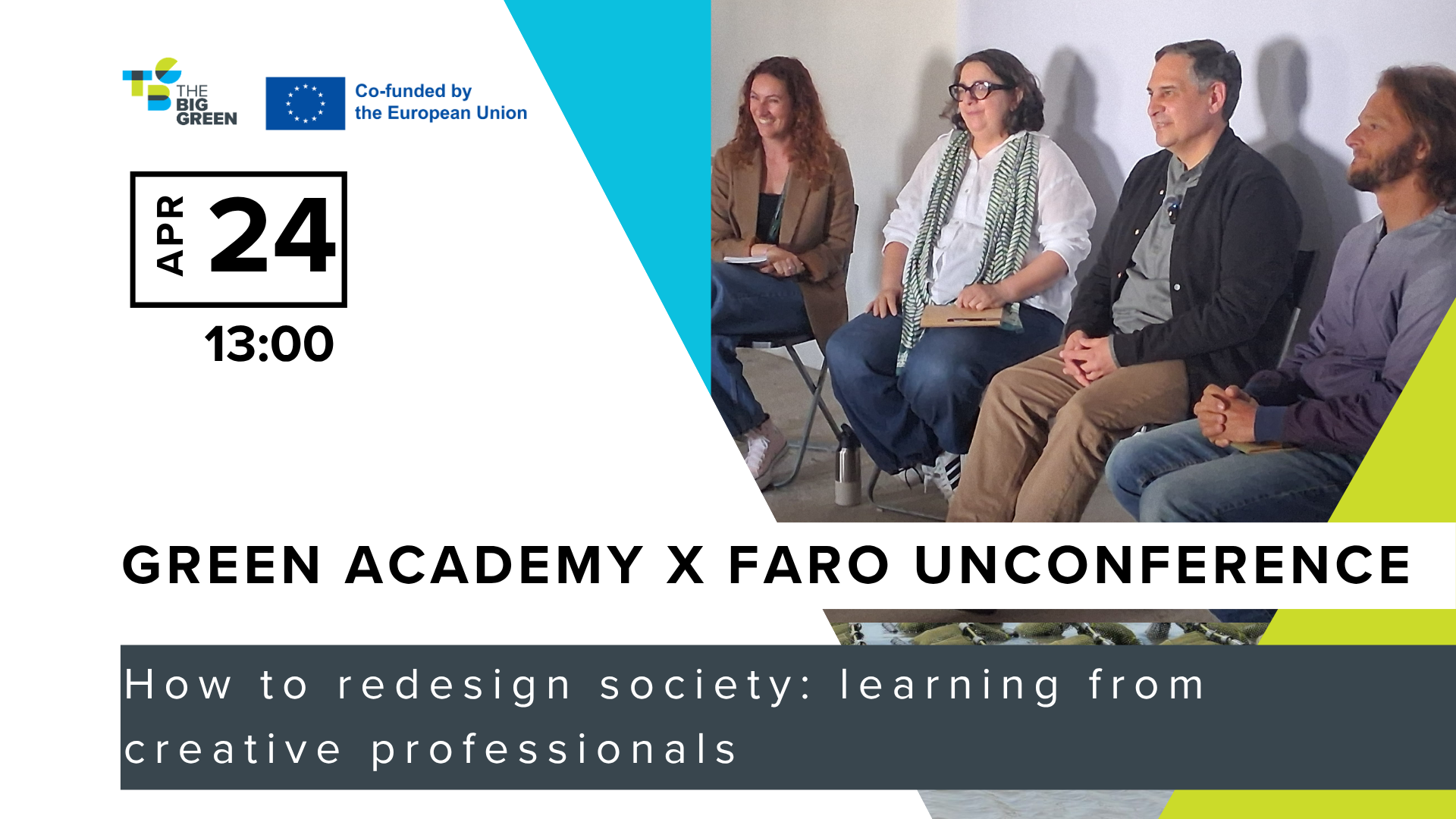
Green Academy x Unconference in Faro

🌱 Green Academy, Pro Progressione’s learning programme isoffering an open platform for the cultural and creative sectors to engage with sustainability and critical environmental issue.

🌱Our host, Philipp P. Thapa is an ecologist, philosopher, and writer who is training to become a heritage interpreter. As a researcher with the Sustainable Europe Research Institute SERI Germany under the The Big Green, he currently focuses on understanding the relationship between arts, culture, and sustainable development.

The Green Academies are organized by Pro Progressione in collaboration with the Sustainable Europe Research Institute (SERI.de) in Germany and co-funded by the Creative Europe programme of the EU.
https://vimeo.com/1194420827

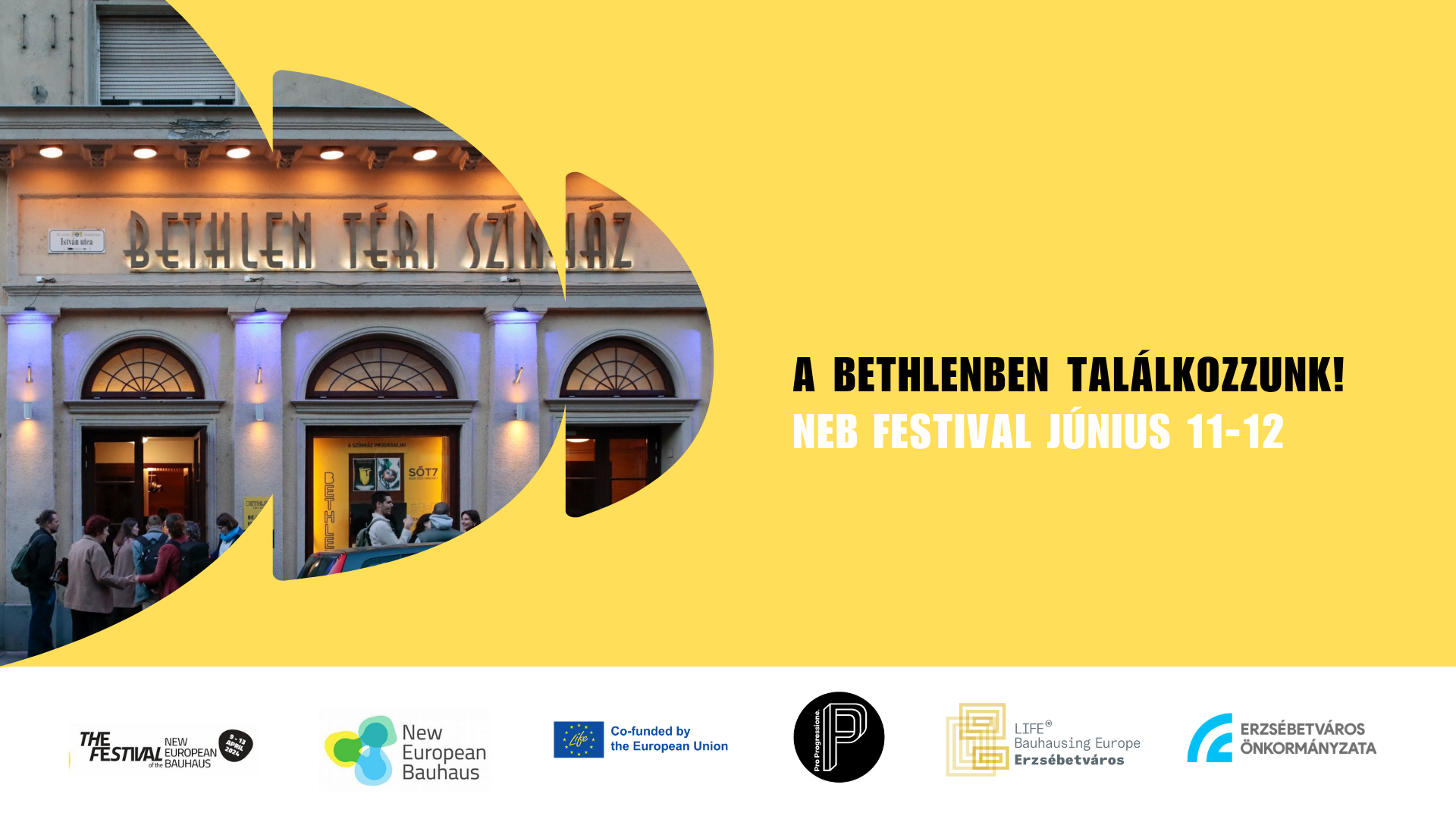
Let’s meet at Bethlen! – New European Bauhaus festival // 11-12 June

The community cultural event organised by Pro Progressione and the Municipality of Erzsébetváros, as part of the LIFE Bauhausing Europe project and as a satellite programme of the New European Bauhaus Festival, places the reimagining of the Bethlen Square Theatre and its surroundings at the centre. We invite you to join us for two days where art, sustainability, urban stories, and community participation come together.

The aim of the event is to bring visitors closer to the transformation of the Bethlen Square Theatre, as well as to the shared thinking that supports the creation of a more liveable, inclusive, and environmentally conscious urban environment.

Throughout the day, we welcome everyone with open, all-day programmes and guided events: local residents, students, artists, professionals, families, and anyone curious about the hidden stories and future possibilities of Erzsébetváros.

You can take part in a clothing and plant swap; bring your own mug as part of our efforts to reduce waste; discover the results of the LIFE Bauhausing Europe and Performing Landscapes projects through a mini-exhibition; and try out our board game, Spaces for Future, in which you can explore what life on Earth might look like in the next century.

As part of the programme, guided by Dávid Somló, we will explore the most hidden corners of the Bethlen Square Theatre. You will also have the chance to talk with the architects working on the theatre’s renewal, focusing on the architectural, environmental, and community aspects of the building’s transformation. In addition, a special map-based walk presenting the spaces of Bethlen will help you look at the theatre and its human stories from a new perspective.

The artistic performances and workshops all serve the same purpose: to think together about how culture can become one of the driving forces of sustainable urban change.

This event is not only a presentation, but also an invitation: to connect, to engage in dialogue, to create together, and to imagine a more liveable, greener, and more community-centred future for Erzsébetváros — and within it, for Bethlen.

Come along, bring your own mug, a plant or piece of clothing to swap, and discover the new stories of Bethlen and its surroundings with us!

Detailed programme

June 11

10:00 Opening

15:00 – 16:00 Horváth Florencia – Karádi Gergő: Actually No One
What happens when a poet and a songwriter enter into dialogue with one another? For them, the lesson is clear: personal experiences become universal, and creative worlds become boundless. Within the relationship between literature, music, and theatre, neither of them can remain merely who they appear to be according to their author biographies. They are capable of transforming into one another, of embodying different figures from the other’s life, and even of changing places while still remaining themselves.

Actually No One creates a universe based on Horváth Florencia’s poetry collection Hiátus, from which Karádi Gergő has set several texts to music. Anyone who enters the space becomes part of it through the interaction of text, music, and visuals. As the performance explores the absence of a mother figure, audience members separated from the stage are also confronted with a void that they may recognize in their own lives. In this case, however, it is not the absence itself that truly matters, but what one does with it.

15:00 – 18:00 our garden / this space is ours
Performative Material Workshop
Closing event of the Performing Landscapes project

Our Garden is a collective, performative creative process that explores the relationship between body, material, and space, using the triangular form as a starting point. During the workshop, participants work with various materials and techniques — textiles, ceramics, cardboard, and their own bodies as tools for sensing and shaping space.

At the heart of the programme are shared attention, presence, and the practice of “radical care and listening.” The creative process does not focus on producing a finished object, but rather on the process through which individual and collective perception, movement, and material use become connected.

The triangular form represents connection: relationships between people, bodies, materials, and natural elements. It also refers to the shapes of certain green surfaces and structures in the space where the programme takes place. Plants and plant forms also appear throughout the workshop as organic inspirations and starting points for perception.

The workshop functions as an imaginary journey: an attempt to reconnect with ourselves and with the state in which, as children, we had not yet separated ourselves from nature. Through the shared work, perception, intuition, and dialogue with materials come to the fore, creating the possibility for a slower, more attentive, and more connected creative experience.

18:30 – 20:30 Dávid Somló: Cracking the Space
Cracking the Space is a playful, participatory sensory workshop that seeks to break down and then reassemble the experience of the renewed spaces of the Bethlen Square Theatre. Through exercises involving attention, movement, and spatial perception, participants experience the fresh, crisp spaces, while shifts in perspective, unusual situations, and reinterpretations of perception disrupt familiar patterns of presence. In this way, the workshop opens up the possibility of connecting to a new space, while also becoming a non-verbal community experience.

As a maximum of 25 people can participate in the workshop, please indicate your intention to attend via the following link:
Registration: https://forms.gle/wpf1ZH3ujamTZD7M8

June 12

10:00 – 12:00 The Book of Dreaming book launch — children’s activity
The Book of Dreaming is a special participatory programme in which Ukrainian children present their own stories, thoughts, and dreams through a book they created together. The book about Budapest is an unconventional guidebook: it presents the city from the children’s point of view, through personal experiences, observations, imaginary stories, and their own perspectives.

During the two-hour event, participants can gain insight into the process of creating the book, as well as learn about the creative and community-based methodology developed and led by the London-based artist duo Andy Field and Beckie Darlington. The programme is at once a book launch, a community encounter, and an inspiring conversation about children’s imagination, connection to the city, and the power of storytelling.

The event is open to all age groups and warmly welcomes everyone interested in how children see Budapest, and how they can become creators of their own stories and visions of the future.

16:00 – 19:00 Sewing workshop
This time, the Pinkponilo team is moving into green spaces and sewing with you outdoors.
We were inspired by the internet’s “sewing in extreme places” videos to free sewing from apartments, boxes, and procrastination. We are no longer waiting for the perfect moment, the perfect equipment, or the perfect weather.

Bring your T-shirt, top, or any item of clothing, and let’s transform it together:
● make your own patch
● sew on yarn, buttons, and textiles
● screen-print slogans onto it — we are preparing “Budapest your regimes”
● leave a mark on the fabric
● connect with others and communicate through a textile installation

During the workshop, participants will create a large-scale embroidered textile image together. Standing on either side of the stretched textile, participants pass the needle to one another, its back-and-forth movement connecting gestures and people. The final image gradually emerges from the different coloured threads and the rhythm of the shared work.

The workshop is led by a coordinator who supports collaboration and guides the creative process. The aim of the programme is not only to create a collective textile artwork, but also to strengthen connection, communication, and the community experience through craft-based creation.

The phrase “Budapest your regimes” will appear pre-drawn on the textiles, and participants will embroider it together. The areas around the text can be freely shaped by participants with different motifs, stitches, words, and textile elements, so that individual traces and spontaneous gestures also appear alongside the shared form in the final work.

The past few months have been quite intense in this country. Now, beneath the leafy trees, we will sew, talk, connect, and reshape together everything we bring with us.

16:00 – 19:00 Hajgató Sári – HelloBotanika plant-painting workshop
Interactive watercolour workshop with dye plants

In this informal session, participants can paint greeting cards, small pictures, or gift tags on premium watercolour paper using colourful inks extracted from plants.

They can discover the magical colouring power of plants, try out playful ways of modifying colours, and, while expressing their creativity, gain new knowledge about wild-growing, cultivable, and kitchen-waste dye plants. This awareness-raising workshop offers an opportunity to acquire new knowledge while also providing creative relaxation, bringing the plants in our environment into a new perspective.

The activity is suitable for all ages, runs in approximately 20-minute sessions, and everyone can take home the small paintings they create.

16:30 – 18:00 The New European Bauhaus in Hungary – Roundtable Discussion

The New European Bauhaus (NEB) is an initiative of the European Union aimed at ensuring that the green transition of our built environment and beyond is livable, attractive, and affordable for all European citizens. This initiative supports solutions and projects that are not only sustainable but also inclusive and aesthetically pleasing, while respecting the diversity of European traditions and cultures.

To explore how this initiative is taking shape in Budapest and Hungary, we’ll be speaking with experts in architecture and community building who are familiar with domestic NEB projects and the NEB system.

Participants:
Krisztián Tóth and Veronika Vivas (architects responsible for planning the renovation of the Bethlen Square Theater as part of the LIFE Bauhausing Europe project)
Balázs Humayer (technical director of the AHA Budapest project)
Kovács Krisztina, KÉK curator, staff member of AHA Budapest
Moderator:
Fruzsina Dézsi (head of the Green Pillar at Pro Progressione)

18:30 – 20:30 Dávid Somló: Cracking the Space
Cracking the Space is a playful, participatory sensory workshop that seeks to break down and then reassemble the experience of the renewed spaces of the Bethlen Square Theatre. Through exercises involving attention, movement, and spatial perception, participants experience the fresh, crisp spaces, while shifts in perspective, unusual situations, and reinterpretations of perception disrupt familiar patterns of presence. In this way, the workshop opens up the possibility of connecting to a new space, while also becoming a non-verbal community experience.

Creative collaborator: Péter Mendel.

As a maximum of 25 people can participate in the workshop, please indicate your intention to attend via the following link:
Registration: https://forms.gle/wpf1ZH3ujamTZD7M8

Ongoing programmes on both days
Board game corner – gallery
Outdoor exhibition
Bethlen Stories – discover Bethlen’s stories with the help of QR codes and your mobile phone!

The festival is organized as part of the LIFE Bauhausing Europe project, co-funded by the LIFE programme of the European Union.

Photographs and audio recordings will be made at the event. Participants acknowledge that they may appear in the photographs and audio recordings taken at the event as visitors and consent to the organizers’ use of such recordings in connection with their own activities. Participants may not make any claims against the organizers, the creators of the recordings, or any other parties using the recordings under any valid legal grounds in connection with such use of the recordings.

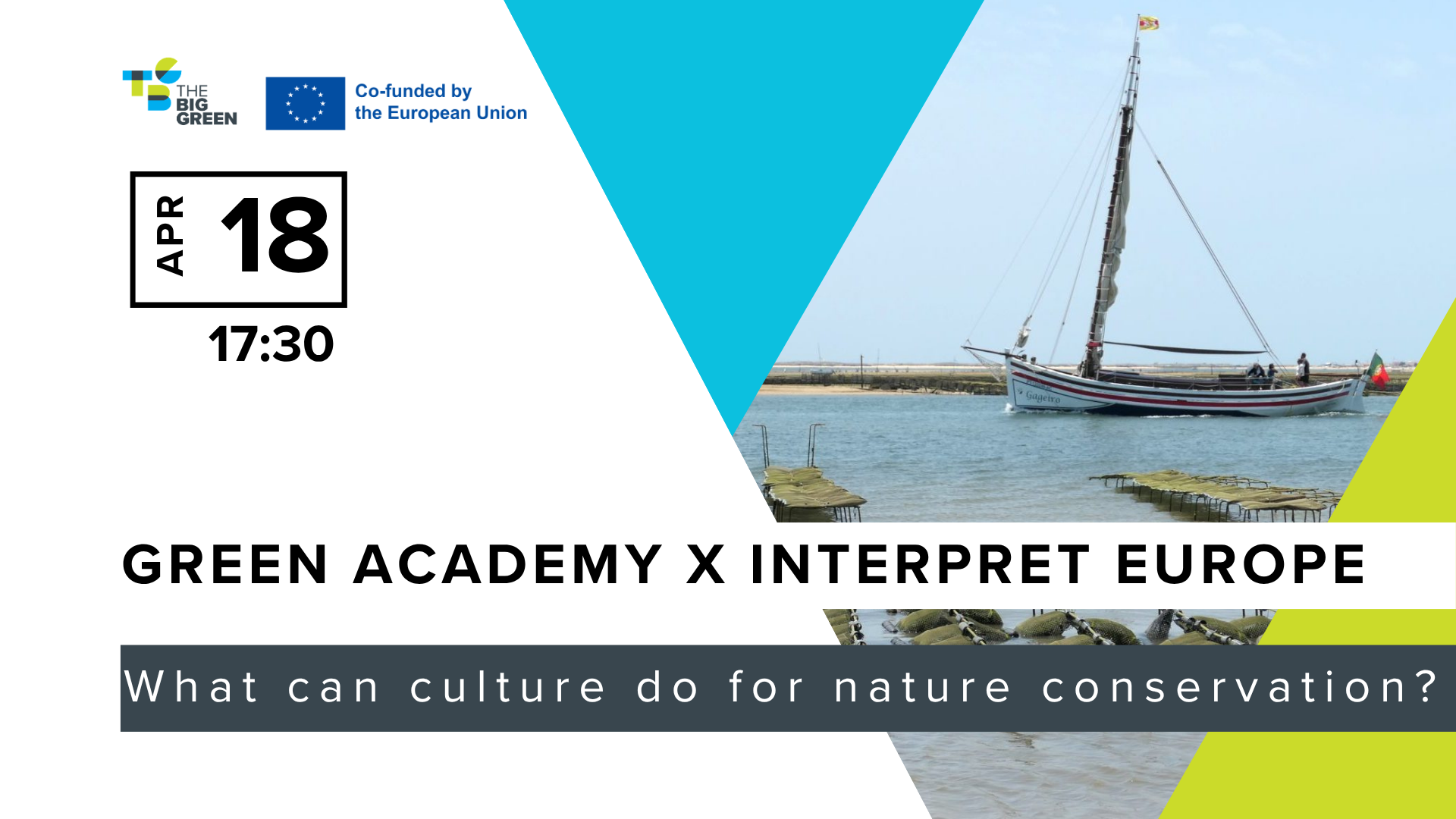
Green Academy X Interpret Europe: What can culture do for nature conservation?

Sciaena is a Portuguese non-governmental organisation working to promote a healthy marine environment through sustainable practices, public engagement, and political intervention. Yet alongside scientific advocacy and policy work Sciaena has increasingly turned to arts and culture as tools for advancing their cause — from community events to international creative collaborations.

Drawing on conversations with the team and their involvement in projects like The Big Green, we reflect on what the arts can offer that science communication alone cannot: emotional connection, broadened imagination, and active social engagement.

This session is part of the Green Academy, Pro Progressione’s learning programme offering an open platform for the cultural and creative sectors to engage with sustainability and critical environmental issue.

Philipp P. Thapa is an ecologist, philosopher, and writer who is training to become a heritage interpreter. As a researcher with the Sustainable Europe Research Institute SERI Germany under the The Big Green, he currently focuses on understanding the relationship between arts, culture, and sustainable development.

676625801 1441030418062989 5569378642999243303 N

The Green Academies are organized by Pro Progressione in collaboration with the Sustainable Europe Research Institute (SERI.de) in Germany and co-funded by the Creative Europe programme of the EU.

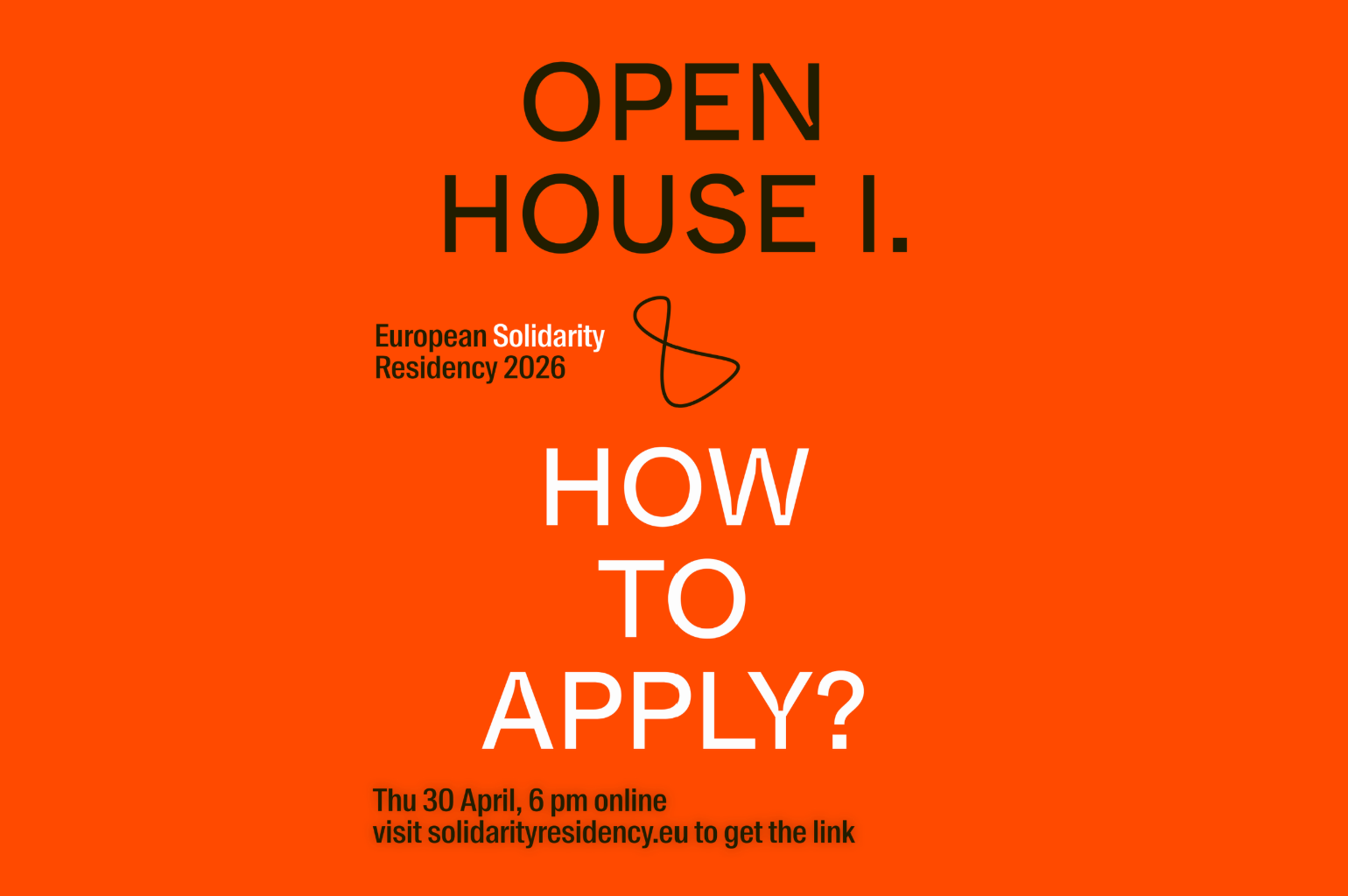
ESR 2026 Open House I.

🎤 Miloslav Vorlíček, Head of Residencies at Lidice Memorial

🔗 Google Meet Link: https://meet.google.com/aqo-fexn-pnu

The 60-minute session will cover the details of the ESR 2026 residency program, including application deadlines and logistics, and will include a reminder of the tight deadline for the current open Call. It provided prospective applicants with a clear, step-by-step walkthrough of the application process for the fully funded 30-day residencies in Budapest, Dubrovnik, and Lidice.

APPLY FOR ESR 2026
📌 Reminder: Open Call Closes: Wednesday, 13 May 2026 at 1 pm CEST

👉 Join the free ESR Commons Membership (Free) at https://solidarityresidency.eu/

👉 Complete the ESR 2026 Application Form there

👉 Submit CV/resume to the ESR 2026 Application Form

📍 ESR 2026 will take place in three locations – Budapest, Dubrovnik & Lidice – from Monday, 14 September to Tuesday, 13 October 2026.

Funders and Partners
🌍 Project partners: Lidice Art Collection — Lidice Memorial(CZ),Pro Progressione(HU), Art radionica Lazareti (HR).

🇪🇺 ESR is co-funded by the European Union. Views and opinions expressed are, however, those of the author(s) only and do not necessarily reflect those of the European Union or European Education and Culture Executive Agency (EACEA). Neither the European Union nor the granting authority can be held responsible for them.

“My biggest hope was that the program I helped planning would have a long term impact on the participants career paths” – interview with Márton Csuzi, external expert and curator of ESR

Hu Marton Csuzi Advisor

To start with, could you briefly introduce your role in the European Solidarity Residency project, and what being the External expert, Mentor means in practice? What personal and professional experiences did you bring into this project?
My background is contemporary performing arts, I am a dancer, acrobat, I co-founded a fresh, small company, called OneTwoMany Collective. In addition to being a performer and creator I work as a curator, coordinator at a big scale music Festival and i participate in all kinds of cultural projects from conducting researches to develop financial models for art organizations. I use my wide range of experience in the ESR program to help in planning and running the residency program, to guide the participants through it, to support the selection process and evaluating the results as well. The direct prelude to this collaboration with Pro Progressione was a previous Creative Europe project called DemArt project, where I played a very similar role in working with non professional curators.

How would you describe the core mission of ESR in your own words, and what does “solidarity through art” mean to you in practice?
The most important mission of the project is to contribute to the formation of curatorial practices and careers of emerging cultural professionals who are just starting their paths as curators and facing some challenges of unequal opportunities. This contribution is very specific: international residencies, mentorship, field visits, hands on experience.

When you first joined the project, what were the initial expectations and objectives—and how have they evolved since the project started?
At the beginning I had goals rather than expectations. My biggest hope was that the program I helped planning would have a long term impact on the participants career paths. Now my aim is more to develop the program to be more measurable both quantitatively and qualitatively.

Looking back so far, what do you feel has worked particularly well, and what has surprised you during the implementation?
What surprised me, that the most helpful part of the program was a workshop about a specific part of project management: mapping stakeholders of a particular project idea. This was the least directly art related activity yet the most useful for the participants. Probably because this was the least subjective element too.

Could you walk us briefly through the participant selection process? What kind of resident profile did you consider ideal for the Budapest context—and what made Alma Kadic and Raouf Moussa strong matches for this residency?
We were looking for candidates who are really at the beginning of their pathway as curators and have pretty personal relation to solidarity. Another very important consideration was that we wanted people who would benefit the most from what we can offer, so we chose people with a multidisciplinary approach and a strong socially engaged mindset.

ESR explicitly prioritises emerging cultural professionals from underrepresented and disadvantaged backgrounds. How did this value influence the selection process and your curatorial thinking?
It is a very complicated challenge: what does disadvantaged mean? We were focusing on people from countries which are underrepresented in the European cultural circulation. Alma is originally from Bosnia, Raouf from Tunisia, but both are living in Germany and Belgium for a while, so they have a deep understanding of the European art scene and the professional field of culture. They are both at the very beginning of their curatorial careers and had not many opportunities beforehand to bring to life their curatorial ideas.

How did you design the professional programme of the Budapest residency? What were the key thematic or methodological principles behind it?
The most important factor we were aiming for was diversity. We wanted to introduce the Hungarian contemporary art scene in its complexity rather than focusing on one segment of it. The other aspect was multidisciplinarity involving both performing and visual arts. Through job shadowing days we wanted to provide a deep insight into into the work of top experts, via field visits we wanted to give an overview of the artistic scene itself and by offering workshops we wanted to give hands on experience and knowledge in management and organisational practices. The central element of the whole residency was individual work. Participants had to design a project, create a plan for implementation but didn’t have to really bring it to life. This gave them a reference point for the aforementioned activities.

Budapest can be a complex but inspiring context for artistic work. In what ways did the city influence the residency programme and the residents’ artistic processes?
The participants chose to work on a very location specific idea: reinterpretation and reintegration of socialist monuments. This is not limited to Budapest only, but this is one of the few cities which were really changed its narratives through changing its monuments after the socialist regime’s collapse, but there’s people still living whose everyday life was accompanied by those monuments.

The residency involved selected institutions and professionals. What were the main criteria when choosing these partners, and what kind of collaboration were you aiming for?
We were trying to choose experts who are key figures and institutions of how the contemporary art scene is developing at the moment in Budapest. These people are either very much experienced and helping to shape the cultural scene for decades, or having such charisma and momentum despite their young age that they have the opportunity to refresh the work of the aforementioned experts.

D30a0879

From your perspective, what impact did the Budapest residency have on the residents—both in terms of artistic development and personal / professional growth?
It is really difficult to evaluate the impact on the participants in such a short period of time, that’s why I think it is important to follow them and their professional progress for a longer period of time, but one thing is certain: they both found new perspectives in their work, expanded their network.

Based on the one-month-work with Alma and Raouf, what feedback of theirs resonated with you most? Were there any reflections that made you rethink parts of the programme?
I feel now that for next time the program should have less differing elements and more opportunities to dive deep. Fewer people to follow as shadows, cooperation with one institution as sort of an internship, more professionals involved in the individual work as mentors, helpers, guides.

What are your main plans and ambitions for the next residency? What will you keep, and what would you like to change or strengthen?
I would focus more on practical experience. Not only visits but real working experiences.

How do you feel this work has contributed to your career as an artist, curator, or cultural professional?
It teaches me a lot about the complexity of the cultural life in Budapest and gives me an opportunity to have an insight into the international context.