
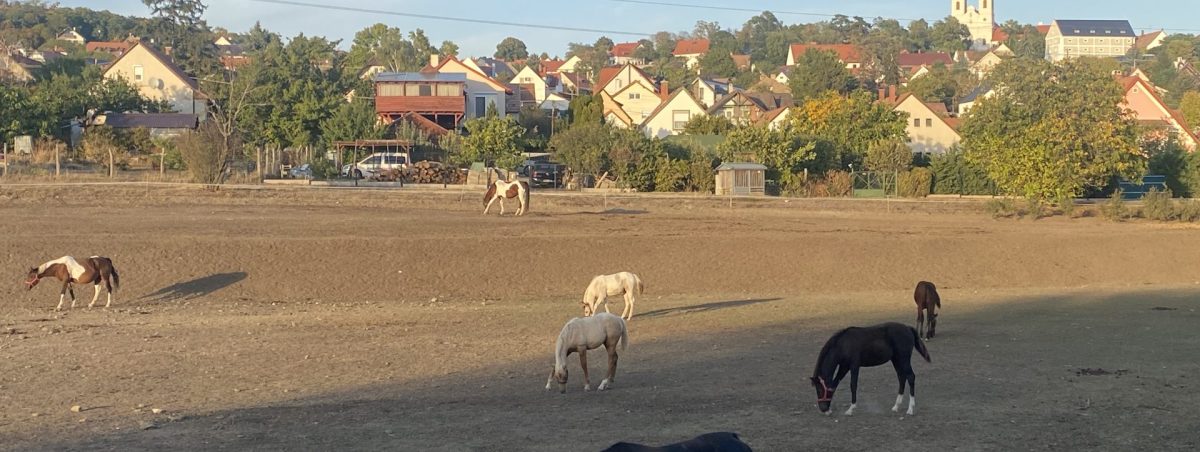
How can traditional icon painting connect with the landscape of Lake Balaton and the daily rhythms of Benedictine life? Artist Sanja Dragutinovic Komatina is exploring these connections during her MON-ART residency at Tihany Benedictine Abbey in Hungary, bringing together historical research, traditional craftsmanship and her experiences of the place.
Sanja is one of two artists selected for the MON-ART residency in Tihany, which explores the relationships between contemporary art, Benedictine heritage and the natural environment. Through collaboration with the monastic and local communities, the artists are developing projects that encourage shared creation, ecological awareness and new ways of engaging with the area’s cultural and spiritual heritage.
Based between Budapest and Belgrade, Sanja is an artist, iconographer and conservator-restorer. She graduated in painting and restoration from the University of Arts in Belgrade, where she subsequently taught conservation and restoration for 25 years. She also worked as a guest lecturer in Thessaloniki, Greece, specialised in wall-painting conservation at ICCROM in Rome, and participated in conservation projects in Turkey, Italy and Serbia. Her artwork has been exhibited in Serbia, Hungary and Canada. After decades devoted to conservation and education, she has returned to painting, combining the traditions of icon painting with her own artistic expression.
In Tihany, slowing down and becoming familiar with her surroundings are important parts of this process. Exploring the peninsula, observing its natural environment and learning about Benedictine monastic life help Sanja connect the traditional language of icon painting with the particular character of the place. Conversations with the monastic community also inform the direction of her work.
During the first phase of the residency, Sanja began developing a series of three icons, initially dedicated to Saint Tryphon, Saint Phocas the Gardener and Saint Benedict. Following discussions with the community, the second icon may instead depict Saint Aignan, known in Hungarian as Szent Ányos, the patron saint of Tihany Abbey. Each figure offers a different connection to the monastery, its surroundings and the themes of the project. As Sanja explains, “Lavender will enter each icon differently: as attribute, labour, and space.”
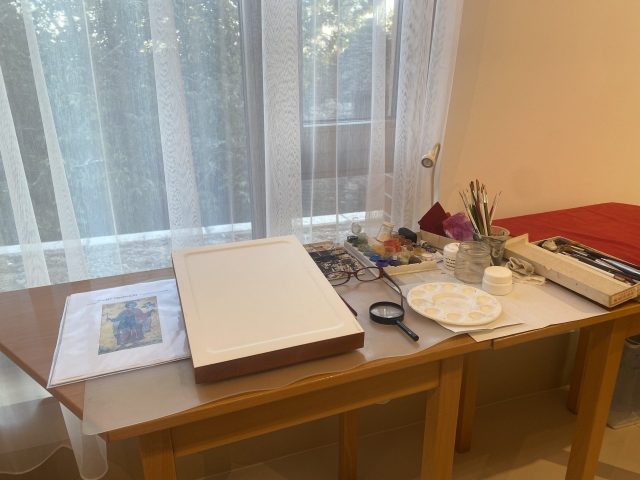
The first icon focuses on Saint Tryphon, traditionally associated with gardens, vineyards and the protection of plants. Working with traditional materials and techniques, Sanja has been preparing the wooden panel, applying gold leaf and gradually building up the first layers of colour. Photographs from the studio document these early stages, offering a closer look at the careful craftsmanship behind the emerging work.
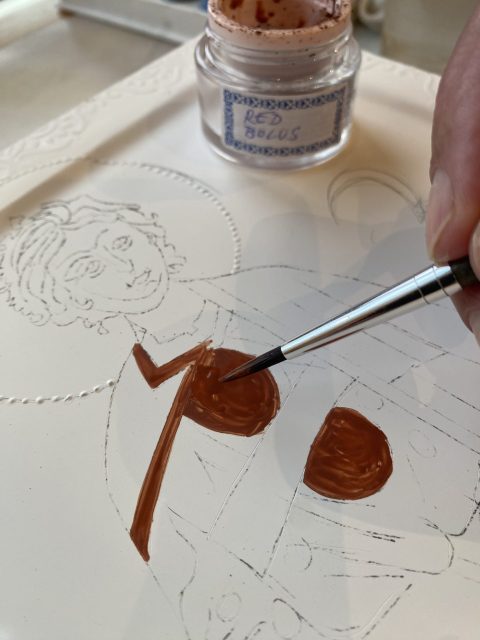
“My studio in Tihany is where historical research and practical work come together,” she says. The observations gathered outside the studio continue to inform the work within it, connecting her exploration of the landscape and monastic life with the handling of pigments, gold leaf and the painted surface.
The residency also includes plans for opportunities to learn and create together. Sanja will introduce traditional icon-painting materials and techniques, followed by a community workshop in which participants will make small manuscript illuminations. These works are intended to become part of the final residency exhibition, bringing the participants’ contributions into dialogue with her own paintings.
Discover more about Sanja’s artistic practice on her website and Instagram.
The MON-ART project is co-funded by the Creative Europe programme of the European Union.