
We’re looking for Mon-Artists for our residency programme!
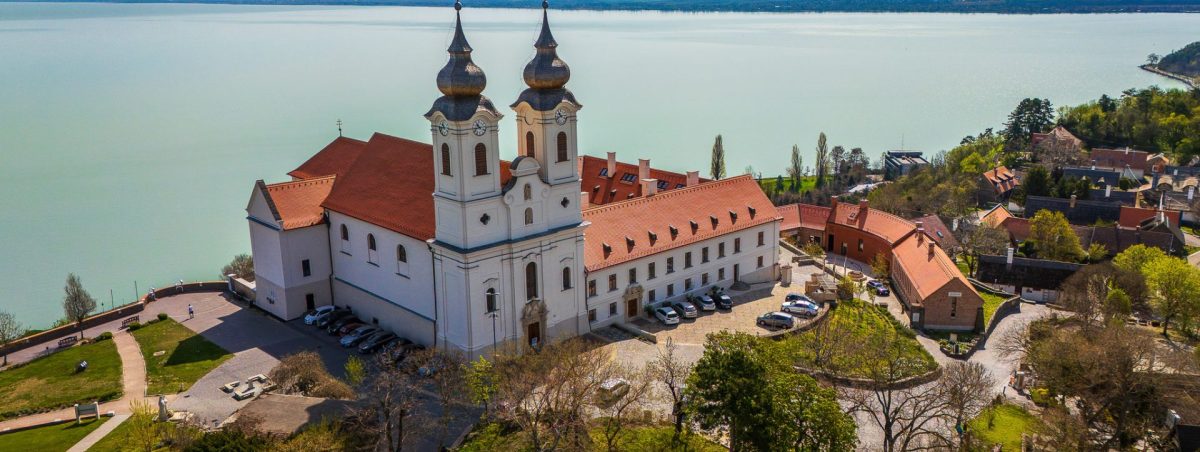
Residency Location: Tihany – The Benedictine Abbey of Tihany
Reponsible Partner: Pro Progressione
Residency time range: 2026.08.01 – 2027.04.30
Duration of each residency: The average duration is 3 or 6 months. Applicants may apply for residency positions by submitting a single project.
Number of hosted artists: 1 to 4 artists
Language requirement: English B2 and and local language (Hungarian C1) recommended, but not required.
Application: via https://mon-art.org/ website, with the selection of the residency.
Context and Spaces for Regeneration
Description of the site:
Tihany Benedictine Abbey is an 11th‑century monastery and major landmark above Lake Balaton, with a Baroque church, crypt, museum, visitor centre, and surrounding grounds overlooking the village and the Inner Lake. It functions simultaneously as a parish, pilgrimage site, cultural centre, and producer of herbal and lavender-based goods linked to the Balaton–Bakony landscape.
The Tihany Abbey is a sacred, and heritage site receiving many visitors annually. A major challenge lies in balancing its monastic identity with its public visibility and tourism-related exposure. Religious sensitivities, especially where artistic interpretations intersect with sacred space. At the same time, the monastery sees art as a means of dialogue — it regularly hosts exhibitions, concerts.
Cultural / social relevance:
The abbey is a key symbol of Hungarian Christian heritage, home to exhibitions (e.g. the Deed of Foundation display), concerts, themed guided tours, and special events like the Night of Museums (Múzeumok Éjszakája) and summer concert–lavender programmes, attracting both local communities and large numbers of visitors. Tihany itself is framed as the “pearl of Hungary,” where lavender fields, views and historical layers generate a strong sense of place and seasonal tourist pressure.
Intended use of the residency:
The abbey museum, education and visitor areas for process presentations, workshops, small-scale installations, and interpretive materials connected to existing exhibitions and tours. Outdoor spaces such as herb plots near Belső‑tó, walking paths and viewpoints for land art, sound walks, participatory mapping, or gentle performative actions that do not disturb liturgical life. Parish / cultural programmes (concert evenings, themed tours, lavender events) as moments for public interaction, small interventions, or co-created actions in collaboration with abbey staff.
Purpose and Focus
Main Purpose:
The residency at Tihany Abbey focuses on artistic exploration of Benedictine heritage, landscape, and lavender–Balaton ecologies, through slow, community-linked practices that align with MON-ART’s values of sustainability, ethics, regeneration, inclusion, and circularity. The main purpose of the residency is to host artists whose work responds to the Benedictine rhythm of life, the cultural–spiritual heritage of Tihany Abbey, in the specific landscape of the Balaton Uplands, developing site-sensitive works that activate dialogue between monastic tradition, contemporary culture, and the seasonal flow of visitors. The key aim is to develop a practice rooted in observation, sensitivity, and resonance – to listen to the abbey’s layered histories and its present-day life. Artists will be encouraged to explore the spiritual heritage, liturgical life, and community roles of the Benedictine monks, along with the lavender cultivation, while also reflecting on the site’s evolving identity as an important cultural landmark.
Specific thematic focus:
Heritage, ecology, and craft-based regeneration, with particular attention to lavender cultivation, medicinal herbs, and the coexistence of people and nature on the peninsula (e.g. herb gardens by Belső-tó/lake, local lavender culture and Balaton–Bakony Geopark context).
Connection of MON-ART velues:
MON-ART’s values of sustainability and circularity are closely connected to the residency, by working with existing monastic practices (herbal teas, candles, lavender, land use) and low-impact materials, foregrounding repair, care, and cyclical time. The deep respect for liturgical space is an important ethical approach, while collaborative formats that include pilgrims, locals, and seasonal workers, and attention to accessibility in public activities promote inclusion within and between communities. Lastly, regeneration is promoted by artistic interventions that reframe existing spaces (viewpoints, paths, gardens, museum) rather than adding new burdens, inviting more attentive, slower forms of tourism and community connection.
Community Engagement
Target community groups:
Benedictine community and abbey staff (pastoral workers, museum and visitor-centre staff, and those involved in herb and lavender production);
Local residents of Tihany and nearby Balaton villages, including families and elderly parishioners who participate in parish life and seasonal events;
School groups and youth visiting on pilgrimages, retreats, or educational trips linked to the abbey and Lavender House Visitor Centre / Geopark programmes;
Tourists, pilgrims and festival/concert audiences visiting the abbey, lavender fields and village during the high season.
Forms of interaction:
Forms of interaction can include co-creative workshops in museum or education rooms (e.g. around the Deed of Foundation, local historical stories, lavender and herb practices), small-scale making sessions, and collective mappings of memories and routes. Participatory art and storytelling are also potential ways of interaction, in connection with guided tours, concerts, and lavender events, where visitors contribute sounds, texts, drawings or simple actions that feed back into ongoing artistic research. Collective actions in outdoor areas (mindful walks, seasonal garden tasks, simple ecological gestures) that connect spiritual exercises, ecological care, and artistic reflection, can act as further options for interaction.
Expected impact:
For the community, the residency can foster new ways of seeing the abbey and the Tihany peninsula, strengthening local identity while opening intergenerational and visitor–local dialogues around heritage and ecology. For public space, subtle artistic traces (interpretive tools, co-created artefacts, documented walks) may encourage slower, more responsible forms of tourism and deepen the connection between cultural heritage, landscape, and everyday life.
Financial and Facilities
Artists fees/grant: The selected artist will receive a compensation of 1.000 per month, covering all transport and accommodation expenses and as recognition for the work carried out during the residency period, including research activities and engagement with the local community.
Accommodation: Gueasthouse apartment at the Abbey of Tihany
Travel / production costs: Travel, accommodation and production costs are covered by the host organization
Selection Criteria
General eligibility requirements: Artists may apply for a maximum of two residencies, indicating an order of preference. The working language is specified in each residency sheet; a minimum B2 level is required to ensure effective communication with the hosting partner and local community.
Weighting system: Artistic quality 40%, Relevance to MON-ART values 20%, Community engagement 20%, Feasibility 20%.
Calendar and Selection Process:
Selection takes place in two stages: an evaluation of written applications, wihich will lead to the shortlisting of the top 5 candidates and the final online interview. An online open house event will be organized by the host organization durind the second week of April.
Outcomes and Final Presentation
Expected outputs: The residency will generate a diverse array of outcomes, possibly including site-specific artworks, installations engaging with the abbey’s heritage and Balaton landscape, performances or participatory actions involving local community and visitors, and documentation of artistic processes through photography, video, and printed materials. Artists’ work may include sensory interventions related to lavender and herb cultivation, storytelling projects weaving local histories and spiritual practices, and co-created community artefacts reflecting shared knowledge and ecological care.
Restitution event:
At the conclusion of each artist residency, a smaller-scale event shall be organized—such as a presentation, open studio day, or workshop—inviting the Benedictine community, local residents, parish groups, and visitors to engage directly with the artist’s work and foster dialogue. These moments provide intimate opportunities for interaction and reflection that resonate with the abbey’s contemplative atmosphere. Following the full 3 or 6-month residency cycle, a larger culminating restitution event will be held at the abbey, showcasing highlights from both artists’ projects along with collaborative works and community contributions. This event could include guided tours, combined performances, participatory workshops, and exhibitions in the abbey’s museum and public spaces to deepen public connection and mark the residency’s collective impact
Long-term vision:
To ensure lasting visibility and relevance beyond the residency, the works and documentation created will be integrated into the abbey’s cultural programming and archives. This may include permanent or semi-permanent installations in the herb gardens or visitor spaces, digital storytelling platforms hosted by the abbey, and periodic events or workshops inspired by the residency outcomes. Collaboration with the Lavender House Visitor Centre and local cultural institutions will help sustain community engagement and maintain the artistic dialogue with the site’s heritage and ecological cycles over time. Documentation—video, photography, and text—will be disseminated through the abbey’s communication channels and partner networks to extend the residency’s influence beyond the immediate locale.
Application: 10/03/2026 – 03/05/2026
Application instructions:
Application may be written in English and must include:
– CV
– Portfolio (max 10 pages or links)
– Residency proposal (concept, objectives, activities, expected impact, max 10.000 characters in total)
– Title of Proposal
– Concept: artistic idea, inspiration, relation to MON-ART values
– Objectives: what you aim to achieve during the residency
– Relevance to the Residency context
– Planned Activities: methods, workshops, co-creation, artistic outputs
– Community Engagement: how you will involve local communities, target groups, participatory methods
– Expected Impact: on community, public space, cultural heritage, sustainability
– Technical / Logistical Needs: materials, equipment, special requirements
Contact information
Contact email: poulet.daniel@proprogressione.com
Application: via https://mon-art.org/ website, with the selection of the residency.